










What's Happening?
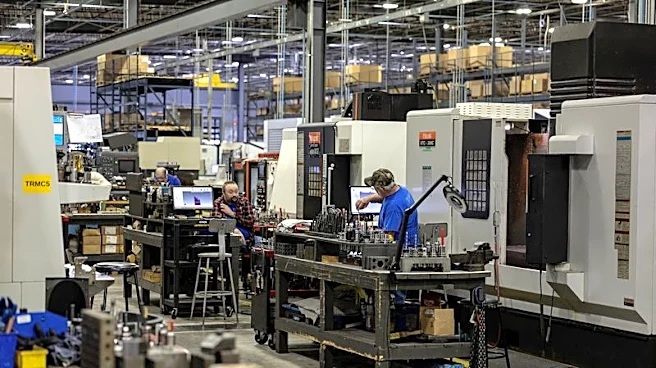
President Donald Trump has declared the U.S. economy as the strongest in the nation's history, citing strong job growth and stock market performance. However, a closer examination of economic data reveals a more nuanced picture. While the labor market has shown
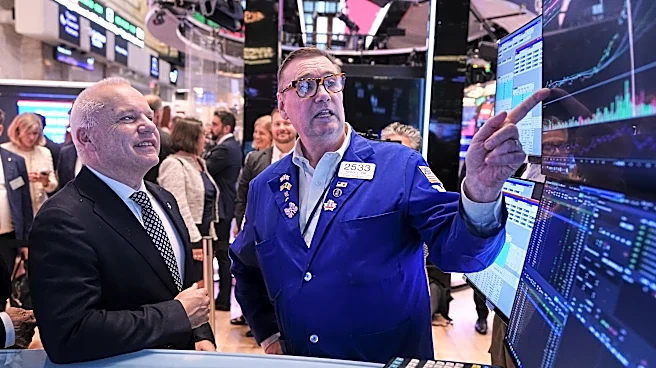
resilience with job growth exceeding expectations, inflation remains a concern. The unemployment rate is steady at 4.3%, and the economy has added an average of 114,000 jobs per month in 2026. Despite these positive indicators, many Americans express concerns about the cost of living and financial outlook. The stock market has reached near-record highs, driven by investments in artificial intelligence, but this has also led to concerns about market concentration and potential volatility.
Why It's Important?
The economic narrative presented by President Trump highlights the complexities of interpreting economic data. While certain indicators like job growth and stock market performance suggest economic strength, the persistence of inflation and public skepticism indicate underlying challenges. The disconnect between economic data and public sentiment underscores the importance of addressing inflation and cost-of-living issues. The concentration of stock market gains among a few tech giants raises concerns about market stability and the potential for a correction. These factors are crucial for policymakers and investors as they navigate the economic landscape and consider strategies to ensure sustainable growth.
What's Next?
As the U.S. economy continues to navigate post-pandemic recovery, addressing inflation and ensuring equitable economic growth will be key priorities. The Federal Reserve's approach to interest rates and monetary policy will play a significant role in managing inflationary pressures. Additionally, the upcoming elections may influence economic policy decisions, as public opinion on economic management remains divided. Investors will need to monitor market trends and potential risks associated with concentrated stock market gains. The resolution of geopolitical tensions, such as the conflict involving Iran, may also impact economic conditions and fuel prices.