





What's Happening?
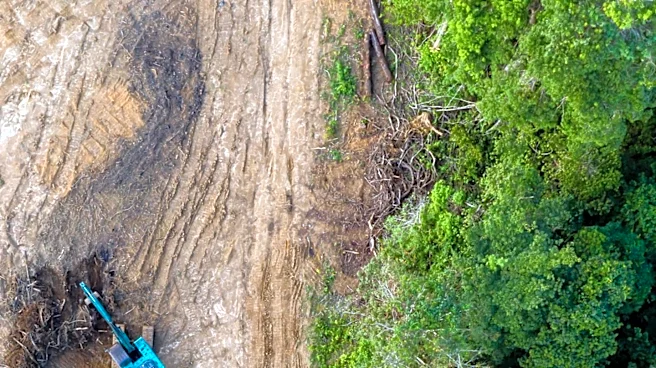
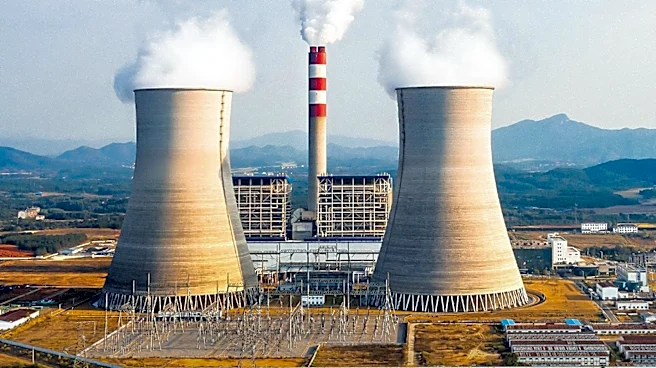
Indonesia is confronting substantial risks related to its coal transition, with approximately 760 million tonnes per annum (Mtpa) of its coal mining capacity projected to reach the end of operating permits by 2035. This figure represents about two-thirds
of the global coal mine capacity nearing retirement or permit expiry, according to a new analysis by Global Energy Monitor (GEM). Despite this impending expiry, GEM senior researcher Tiffany Means clarifies that these figures primarily reflect the natural expiration of permits rather than a deliberate government policy for coal phase-out. In contrast to countries like Germany, the Czech Republic, Romania, and Greece, which have formal coal phase-out policies, Indonesia currently lacks a clear roadmap for ending coal production. The nation also holds about 18 Mtpa of inactive coal mining capacity and plans to develop an additional 17 Mtpa of new capacity, indicating a continued pursuit of higher coal production despite evolving energy market conditions.
Why It's Important?
The situation in Indonesia is critical for global climate efforts and the energy transition. As a leading coal producer, Indonesia's continued expansion of coal mining projects, even as a significant portion of its existing capacity nears expiry, creates a contradiction between its domestic policies and international climate commitments. This approach raises concerns about the potential for stranded assets, weaker project economics, and increased market volatility due to excess production capacity, as highlighted by Dorothy Mei, project manager of GEM's Global Coal Mine Tracker. The lack of a formal coal phase-out roadmap in Indonesia could undermine global efforts to reduce greenhouse gas emissions and transition to cleaner energy sources. For U.S. and international investors, this presents a complex landscape, as investments in new coal projects in Indonesia could face long-term economic viability challenges and reputational risks associated with climate change. The inconsistency in Indonesia's energy policies could also create uncertainty for investors seeking to support clean energy initiatives in the region.
What's Next?
Civil society groups are intensifying scrutiny on Indonesia's climate diplomacy, particularly in the context of the 30th UN Climate Change Conference (COP30) in Belém, Brazil. Experts like Delly Ferdian, Policy and Program Associate at CERAH, are advocating for Indonesia to develop a formal and measurable coal phase-out roadmap with clear targets. They argue that the government should not wait for coal reserves to deplete or permits to expire before initiating its energy transition. A moratorium on new coal mine development is suggested as an initial step to prevent additional assets from becoming stranded. The ongoing discussions at COP30 will likely put further pressure on Indonesia to align its domestic extractive policies with its international climate commitments. The international community will be watching for concrete actions and policy shifts from Indonesia regarding its coal industry and its broader energy transition strategy.
Beyond the Headlines
The deeper implications of Indonesia's coal transition challenges extend beyond economic and environmental concerns. The country's dual approach of promoting clean energy while continuing to support new coal mines creates a significant ethical dilemma and could lead to a lack of trust from international partners and climate advocates. This inconsistency can hinder the effectiveness of global climate negotiations and the collective effort to achieve net-zero emissions. Furthermore, the potential for stranded assets in the coal sector could have broader socio-economic consequences for communities reliant on coal mining, necessitating comprehensive just transition plans. The situation underscores the complex interplay between national economic development, energy security, and global climate responsibilities, highlighting the need for integrated policy frameworks that address both immediate economic needs and long-term sustainability goals. The outcome of Indonesia's coal transition will serve as a significant case study for other developing nations grappling with similar challenges.