
What's Happening?
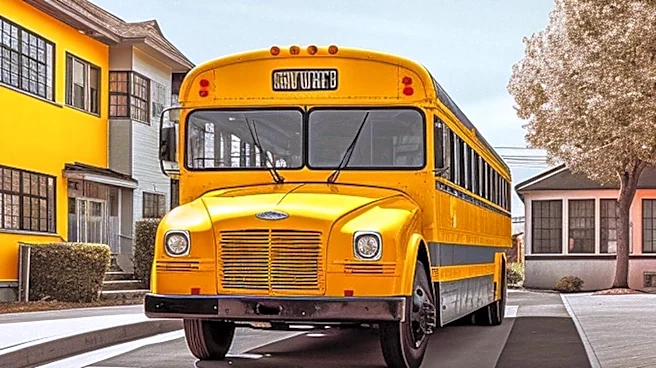
The iconic yellow school bus, a symbol of American education for decades, is confronting new challenges, including driver shortages and changing transportation demands. While the color 'school bus yellow'
was chosen in 1939 for its visibility and safety, the reality of school transportation is evolving. Historically, these buses played a crucial role in consolidating one-room schoolhouses into larger districts and, controversially, in desegregating schools. Despite being recognized as the safest form of on-road transportation per passenger, per mile, the availability of yellow school buses to transport students is diminishing in many areas. This shortage is placing increased pressure on families to find alternative transportation solutions for their children. The Henry Ford Museum of American Innovation houses the oldest surviving school bus, a 1927 model designed by Albert Luce, highlighting the long history and evolution of this essential vehicle.
Why It's Important?
The challenges facing the yellow school bus system have significant implications for U.S. education, family logistics, and public safety. Driver shortages can lead to delayed routes, increased traffic congestion as more parents drive their children, and potential safety concerns if students are forced to use less regulated transportation methods. For many families, particularly in rural areas or those with limited resources, the school bus is a critical link to education, ensuring equitable access to schooling. The historical role of buses in desegregation, though largely ended, underscores their societal impact beyond mere transportation. The current situation could exacerbate existing inequalities, as families without reliable transportation options may face greater barriers to accessing quality education. Maintaining a robust school bus system is vital for student attendance, safety, and the overall functioning of educational institutions.
What's Next?
Addressing the school bus driver shortage will likely require multi-faceted approaches, including recruitment campaigns, improved compensation, and benefits to attract and retain drivers. School districts may explore alternative transportation models or partnerships to supplement traditional bus services. There could also be a push for technological advancements in school buses, such as electric models, to improve efficiency and reduce environmental impact, as suggested by Brad Beauchamp of Blue Bird. Policy discussions may arise regarding funding for school transportation and potential incentives for drivers. The long-term future of the yellow school bus will depend on how effectively these challenges are met, ensuring that this vital service continues to support American students and communities.
Beyond the Headlines
The evolving landscape of school transportation touches upon deeper societal issues, including community infrastructure, educational equity, and the changing nature of work. The decline in school bus availability can reflect broader demographic shifts, economic pressures on public services, and a generational gap in certain skilled labor forces. The iconic status of the yellow school bus as a symbol of childhood and community also means its transformation carries cultural weight. This situation prompts a re-evaluation of how communities prioritize and fund essential services that support children's well-being and access to education. It also highlights the need for innovative solutions to maintain critical infrastructure in the face of modern challenges, ensuring that fundamental services remain accessible to all students.