







What's Happening?
The U.S. Department of Justice (DOJ) has announced the arrests of two Americans, Michael James Bostelle of Pennsylvania and Juan Cecilio Pena Carrillo of Texas, on charges of wire fraud, money laundering, and identity theft. These arrests are part of a crackdown
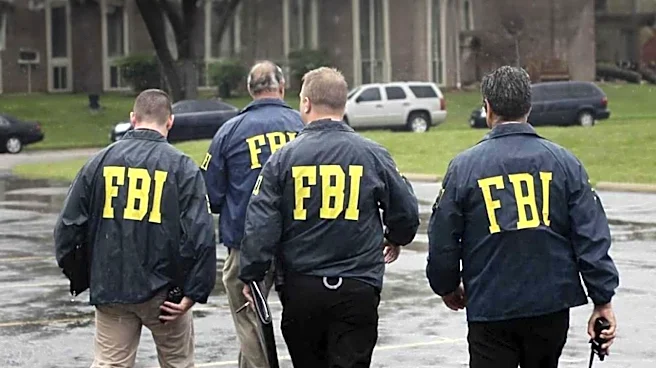
on a scheme that allegedly helped North Korean IT workers steal identities and fraudulently obtain employment at U.S. companies. The operation generated at least $3 million for the North Korean government. The FBI conducted searches at over 40 residences in Texas between September 21 and September 25, believed to be operating as 'laptop farms' for these North Korean workers, seizing approximately 187 laptops and other devices. The indictment also charges several China-based individuals for their roles in directing the operation. The Americans involved allegedly recruited, managed, and trained others to allow their personal information to be used, receiving and hosting laptops from U.S. victim companies to create the illusion that the North Koreans were legitimate U.S.-based employees.
Why It's Important?
This crackdown highlights a significant national security concern, as North Korean state-sponsored activities aim to circumvent international sanctions and fund their government through illicit means. The use of 'laptop farms' within the U.S. to facilitate fraudulent employment not only compromises the integrity of American companies but also poses a direct threat to national security by potentially allowing foreign adversaries access to sensitive networks and data. The scheme impacted over 70 U.S. companies and compromised the identities of 25 Americans, demonstrating the broad reach and damaging potential of such operations. The U.S. government has long warned about North Koreans seeking employment at American firms to generate revenue and potentially access company networks and steal data. This case underscores the ongoing efforts by foreign entities to exploit vulnerabilities in the U.S. employment system and the critical need for robust cybersecurity and identity verification measures.
What's Next?
The two arrested individuals, Michael James Bostelle and Juan Cecilio Pena Carrillo, face charges of wire fraud, money laundering, and identity theft, and will proceed through the U.S. legal system. The DOJ's investigation is likely to continue, potentially leading to further arrests or charges, especially concerning the China-based operators named in the indictment. U.S. companies and government agencies will likely increase their vigilance and implement stricter protocols to prevent similar fraudulent employment schemes. There may also be increased collaboration between U.S. law enforcement and international partners to address the transnational nature of these cyber-enabled financial crimes. The U.S. government will likely continue to issue warnings and provide guidance to businesses on how to identify and mitigate the risks associated with foreign state-sponsored attempts to infiltrate their workforce and systems.
Beyond the Headlines
This incident reveals a sophisticated method of economic espionage and illicit fundraising employed by North Korea, leveraging the globalized nature of remote work and the digital economy. The involvement of China-based operators suggests a complex web of international cooperation in these illicit activities, raising questions about geopolitical implications and the challenges of cross-border law enforcement. The 'laptop farm' concept illustrates how seemingly innocuous residential properties can be weaponized for state-sponsored cyber operations, blurring the lines between physical and cyber threats. The long-term implications include a potential erosion of trust in remote hiring processes and an increased burden on companies to verify the authenticity of their remote workforce. This case also underscores the broader struggle between nations to control critical technologies and information, with economic and national security interests deeply intertwined.