
What's Happening?
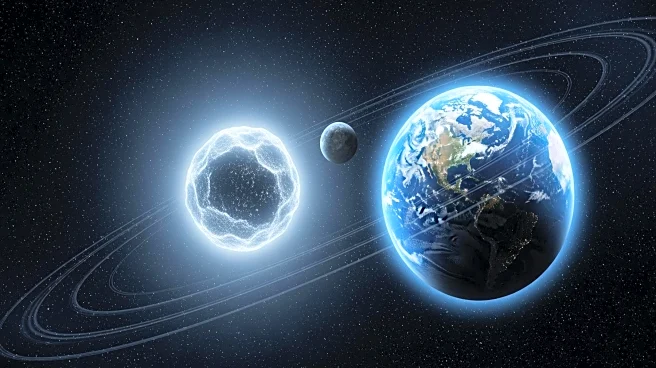
Astronomers have identified a quasi-satellite, 2025 PN7, which orbits the Sun in a pattern that keeps it near Earth. This discovery has led to misleading claims of Earth having a 'second moon.' Unlike
a true moon, 2025 PN7 is not gravitationally bound to Earth but follows a similar orbital path around the Sun. The quasi-moon has been in this configuration for at least 70 years and is expected to remain so for another 60 years. The discovery highlights the presence of other quasi-satellites that accompany Earth in its orbit.
Why It's Important?
The identification of 2025 PN7 and other quasi-satellites provides opportunities for scientific study and potential space missions. These objects are relatively accessible for exploration and could serve as test sites for planetary exploration technologies. Understanding their behavior and characteristics can enhance our knowledge of near-Earth objects and their potential impact on Earth. The discovery also emphasizes the need for accurate communication of scientific findings to avoid public misconceptions.