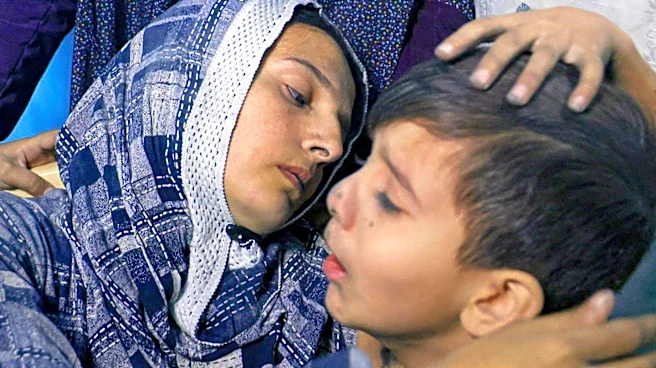









What's Happening?
The International Committee of the Red Cross (ICRC) has called upon journalists to adopt a human-centered approach to conflict reporting and to exercise greater narrative control. Speaking at a two-day training workshop on Humanitarian Reporting in Lagos,
Nigeria, Doris El Doueihy, the ICRC Head of Delegation in Nigeria, emphasized that humanitarian work extends beyond the distribution of food and emergency supplies. She stressed the importance of amplifying the voices of victims and ensuring that their stories of suffering are heard globally. The ICRC highlighted that media narratives play a crucial role in shaping public understanding and policy responses to global conflicts. While the ICRC's operations in Nigeria have historically focused on the North-East due to armed conflict, there is a gradual shift in its operational footprint. The organization encourages journalists to engage with all regions of Nigeria, including those outside primary conflict zones, to provide a comprehensive picture of humanitarian needs. The workshop aimed to foster mutual understanding between the ICRC and the press, ensuring accurate and contextually informed reporting without dictating editorial content.
Why It's Important?
This initiative by the ICRC is important because it seeks to reframe how conflicts and humanitarian crises are presented to the public, both domestically and internationally. By advocating for human-centered reporting, the ICRC aims to shift the focus from mere statistics and physical aid to the personal experiences and dignity of those affected. This can lead to a more empathetic and nuanced understanding of complex situations, potentially influencing public opinion and policy decisions. For U.S. audiences, this approach can foster a deeper connection to global humanitarian issues, moving beyond abstract concepts of aid to the tangible impact on individuals. It also underscores the critical role of a free and informed press in holding power accountable and ensuring that the human cost of conflict is not overlooked. Improved narrative control, as advocated by the ICRC, could lead to more accurate and less sensationalized reporting, which is vital for effective humanitarian response and long-term peacebuilding efforts.
What's Next?
The ICRC's engagement with journalists is expected to continue, with calls for media organizations to send reporters directly into conflict zones to observe humanitarian operations firsthand. This direct exposure is intended to provide journalists with a better understanding of the realities on the ground, leading to more informed and impactful reporting. The ICRC will likely continue to emphasize the need for independent, objective, and contextually informed reporting, fostering ongoing dialogue and collaboration with media outlets. The organization's efforts to promote human-centered narratives could influence journalistic practices globally, encouraging a shift towards more in-depth and empathetic coverage of humanitarian crises. This ongoing collaboration aims to ensure that the suffering of people in conflict-affected areas is not only reported but also understood in a way that drives meaningful action and support.
Beyond the Headlines
The ICRC's push for human-centered conflict reporting touches upon deeper ethical and societal implications. In an era of rapid information dissemination and often superficial news cycles, the call to amplify victims' voices challenges the prevailing trends of detached reporting. This approach can help combat 'compassion fatigue' by making humanitarian crises more relatable and personal, thereby sustaining public interest and support for aid efforts. Furthermore, by emphasizing narrative control, the ICRC implicitly addresses the potential for misinformation and biased reporting to exacerbate conflicts or undermine humanitarian efforts. This initiative highlights the ethical responsibility of journalists to not only report facts but also to convey the human experience of conflict with sensitivity and accuracy. It also underscores the long-term shift required in media consumption and production, moving towards content that prioritizes human dignity and comprehensive understanding over sensationalism.