





What's Happening?
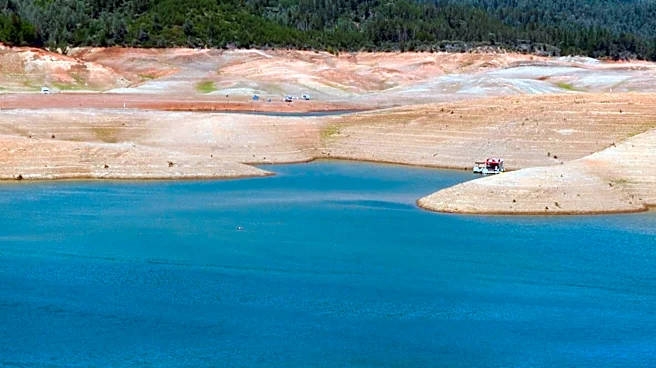
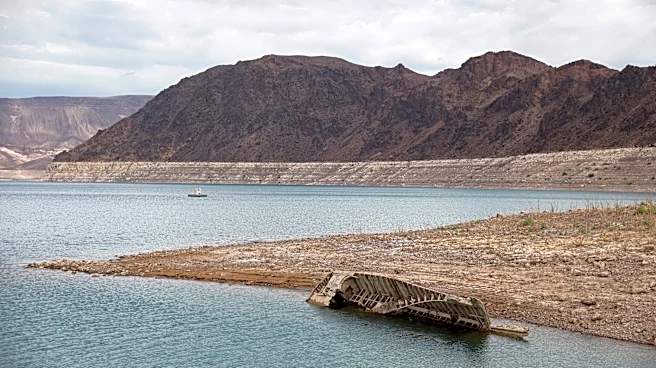
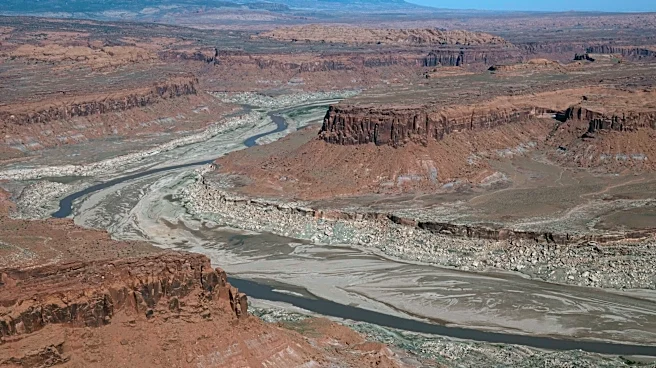
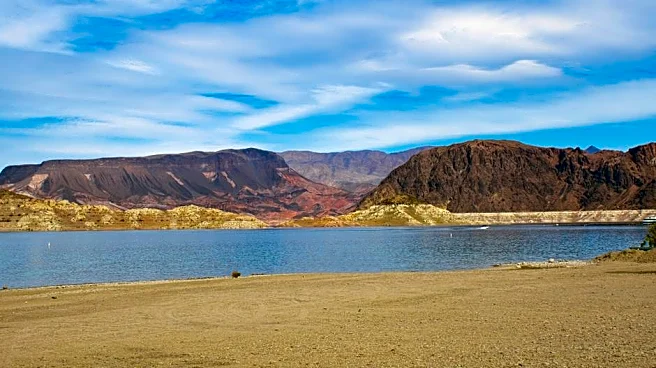
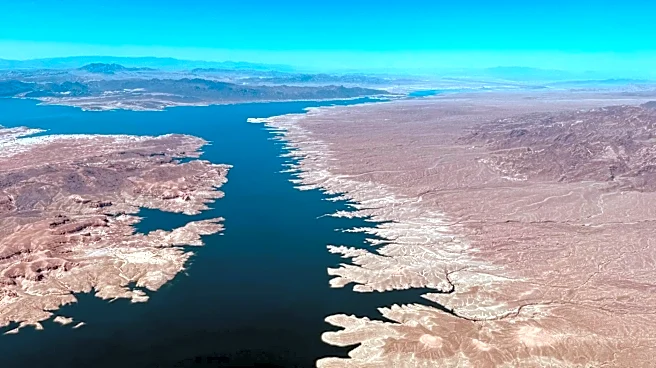
Lake Mead, the largest reservoir in the United States, has hit a record-low water level as the Western U.S. faces a severe water crisis. The reservoir, which is crucial for providing water to millions of Americans and generating hydroelectric power, has dropped
to an elevation of 1,040.5 feet. This decline is attributed to prolonged drought conditions exacerbated by climate change, affecting water supply from the Colorado River. The situation has prompted federal authorities to propose a management plan to address water shortages, including significant cuts to water usage by states in the Colorado River's lower basin. The crisis highlights the urgent need for sustainable water management practices in the region.
Why It's Important?
The record-low water levels at Lake Mead underscore the growing challenges posed by climate change and water scarcity in the Western U.S. The reservoir is a critical resource for drinking water, agriculture, and energy production, and its depletion could have far-reaching consequences for millions of people and industries. The situation calls for immediate action to implement water conservation measures and develop long-term strategies to ensure water security. The crisis also highlights the need for collaboration among states, Native American tribes, and the federal government to address water rights and allocation issues. Failure to manage the water crisis effectively could lead to severe economic and environmental impacts.
What's Next?
Federal and state officials are expected to continue negotiations to finalize the management plan for the Colorado River Basin. The plan will likely involve difficult decisions regarding water allocation and usage reductions. Stakeholders, including agricultural interests, urban planners, and environmental groups, will play a crucial role in shaping the future of water management in the region. The ongoing drought and climate change impacts will necessitate innovative solutions and increased investment in water infrastructure and conservation technologies. The situation at Lake Mead serves as a warning for other regions facing similar challenges, emphasizing the need for proactive measures to address water scarcity.