


What's Happening?
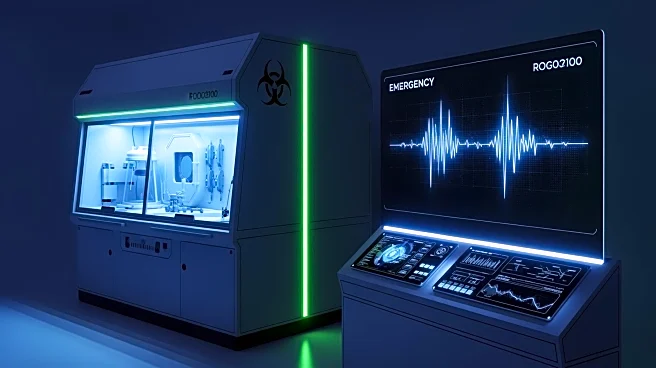
Israel is advancing its bioterrorism preparedness through significant innovations in medical technology and emergency responsiveness. The Tel Aviv Sourasky Medical Center, Israel's largest acute care facility, has implemented cutting-edge trauma services
and rapid-response systems. The center's helipad-to-trauma-room process has been optimized to handle emergencies efficiently, reducing the time from helicopter arrival to operating room to just three minutes. Additionally, the Magen David Adom (MDA) operates the world's first underground, shielded blood bank, designed to protect Israel's blood supply from various threats, including missile attacks and cyber threats. This facility processes and distributes over 300,000 units of blood annually, utilizing advanced automation. MDA, a national non-profit organization, is largely volunteer-operated and serves as Israel's pre-hospital emergency medical system, handling numerous life-saving cases each year.
Why It's Important?
The advancements in Israel's medical technology and emergency systems are crucial for enhancing national security and public health resilience. By developing robust infrastructure and rapid-response capabilities, Israel is better equipped to handle bioterrorism threats and other emergencies. The integration of advanced automation and technology in blood processing and emergency medical services ensures a swift and effective response to crises, potentially saving countless lives. These innovations not only strengthen Israel's healthcare system but also serve as a model for other nations seeking to improve their disaster preparedness and response strategies. The collaboration between medical institutions and technological advancements highlights the importance of innovation in addressing global health challenges.
What's Next?
Israel's focus on medical technology and emergency preparedness is expected to continue evolving, with further developments in collaboration with international partners. Future articles in the series will explore the role of start-up hubs, academic-industry collaborations, and venture capital opportunities in advancing Israel's health ecosystem. These efforts aim to foster innovation and improve patient outcomes globally. As Israel continues to enhance its emergency response capabilities, other countries may look to adopt similar strategies to bolster their own preparedness against bioterrorism and other threats.
Beyond the Headlines
The ethical and cultural dimensions of Israel's advancements in medical technology and emergency preparedness are significant. The emphasis on volunteerism and community involvement in organizations like MDA reflects a societal commitment to public health and safety. Additionally, the integration of advanced technologies, such as virtual reality and robotics, in medical training and response systems, underscores the importance of continuous innovation in healthcare. These developments may lead to long-term shifts in how nations approach disaster preparedness and healthcare delivery, emphasizing the need for collaboration and technological integration.