



What's Happening?
Russian forces have reportedly modified their Shahed long-range strike drones to target Ukrainian aircraft, as part of a broader strategy to enhance their drone capabilities. According to Ukrainian electronic and radio warfare expert Serhiy Beskrestnov,
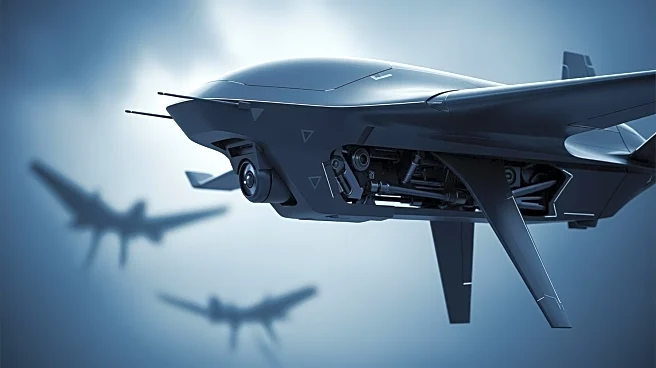
these drones have been equipped with a man-portable air defense system (MANPADS), likely a Verba MANPADS, which allows them to operate as remotely launched short-range air defense systems. This modification was first observed between January 3 and 4, with the drones now featuring a camera and a radio modem for remote control. The MANPADS are positioned to fire in front of the drone, suggesting an intention to target Ukrainian fighter jets and helicopters. This development is part of an ongoing technological race between Russian and Ukrainian forces, with both sides innovating to counter each other's advancements.
Why It's Important?
The modification of drones by Russian forces to target Ukrainian aircraft represents a significant escalation in the technological arms race between the two nations. This development could potentially degrade Ukraine's air defense capabilities, posing a threat to its military operations and civilian infrastructure. The use of advanced drone technology underscores the evolving nature of modern warfare, where unmanned systems play a crucial role. For Ukraine, maintaining a robust air defense system is critical to countering these threats and protecting its airspace. The international community, particularly NATO allies, may view this as a concerning development, prompting discussions on providing further support to Ukraine to bolster its defense capabilities.
What's Next?
As Russian forces continue to innovate and adapt their military technology, Ukraine is likely to seek additional support from its allies to enhance its air defense systems. This could involve acquiring more advanced interceptor drones and other air defense technologies. The ongoing conflict may also lead to increased international diplomatic efforts to address the situation and prevent further escalation. Additionally, the modification of drones could prompt other nations to reassess their own defense strategies and technological capabilities in response to the changing dynamics of warfare.
Beyond the Headlines
The use of modified drones in warfare raises ethical and legal questions about the deployment of unmanned systems in conflict zones. The ability to remotely target and strike aircraft introduces new challenges in terms of accountability and the potential for collateral damage. This development may lead to discussions on international regulations governing the use of drones in military operations. Furthermore, the technological advancements in drone warfare could have long-term implications for global security, as other nations may seek to develop similar capabilities.