







What's Happening?
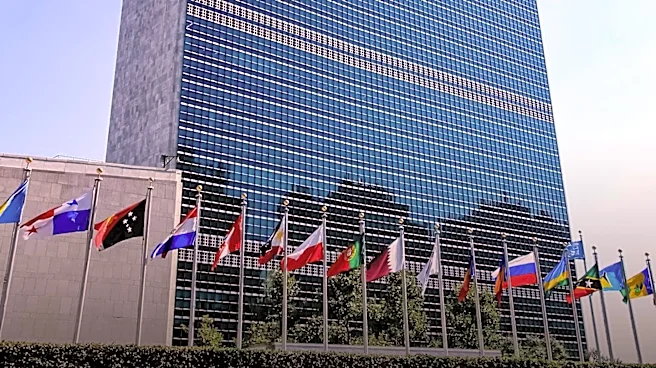
The United Nations in Indonesia is implementing a joint initiative aimed at transforming catalytic investments into systemic change. This collaborative effort involves various UN entities, including FAO, IFAD, ILO, UNCTAD, UNDP, UNEP, UNICEF, and UNIDO.
The initiative focuses on supporting several Sustainable Development Goals (SDGs), such as No Poverty, Zero Hunger, Gender Equality, Affordable and Clean Energy, Decent Work and Economic Growth, Reduced Inequalities, Sustainable Cities and Communities, Responsible Consumption and Production, Climate Action, Life Below Water, and Life on Land. A key aspect of this work involves exploring opportunities to enhance the value of seaweed, with Indonesia being one of the world's largest producers. The goal is to transform seaweed into higher-value products, ranging from sustainable packaging to agricultural fertilizers, thereby contributing to economic growth and environmental sustainability.
Why It's Important?
This joint UN action in Indonesia is significant because it demonstrates a coordinated approach to addressing complex development challenges, which can serve as a model for other regions. By focusing on catalytic investments, the initiative aims to create ripple effects that lead to broader systemic changes, rather than isolated project successes. The emphasis on sustainable development goals directly aligns with global efforts to combat poverty, hunger, and climate change, issues that have indirect but significant implications for U.S. foreign policy and economic interests. For instance, promoting sustainable economic growth and reducing inequalities in countries like Indonesia can contribute to regional stability and open new markets for U.S. businesses. Furthermore, innovations in sustainable packaging and agricultural fertilizers, potentially stemming from seaweed utilization, could offer valuable lessons and technologies applicable to U.S. industries seeking more environmentally friendly solutions.
What's Next?
The joint UN initiative in Indonesia will continue to focus on leveraging catalytic investments to achieve systemic change across multiple Sustainable Development Goals. A particular area of development is the exploration of seaweed's potential to create higher-value products, such as sustainable packaging and agricultural fertilizers. This effort aims to boost Indonesia's economy while promoting environmental sustainability. The collaboration among various UN agencies is expected to continue, ensuring a comprehensive and integrated approach to development challenges. The success of these initiatives could lead to further investments and expanded programs, potentially attracting international partners and fostering knowledge exchange on sustainable practices. The long-term goal is to create lasting positive impacts on Indonesia's economy, environment, and social well-being, contributing to the broader global agenda for sustainable development.
Beyond the Headlines
The initiative's focus on seaweed as a resource for sustainable packaging and agricultural fertilizers highlights a broader trend towards bio-based economies and circular economic models. This approach not only addresses environmental concerns by reducing reliance on fossil fuels and synthetic chemicals but also creates new economic opportunities in developing nations. The collaborative nature of the UN's involvement underscores the increasing recognition that complex global challenges require integrated, multi-sectoral solutions. This model of 'catalytic investments' suggests a shift from traditional aid paradigms to more strategic interventions that aim to unlock inherent potential within local economies and ecosystems. The ethical implications include ensuring equitable benefit-sharing with local communities involved in seaweed cultivation and processing, and preventing potential environmental impacts from increased demand for natural resources. This initiative could set precedents for how international development organizations partner with nations to foster sustainable innovation and economic diversification.