



What's Happening?
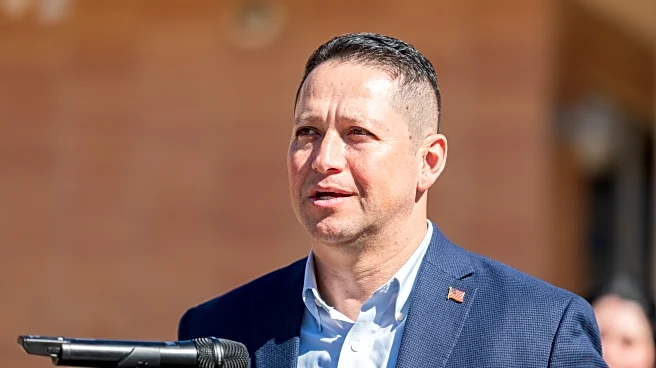
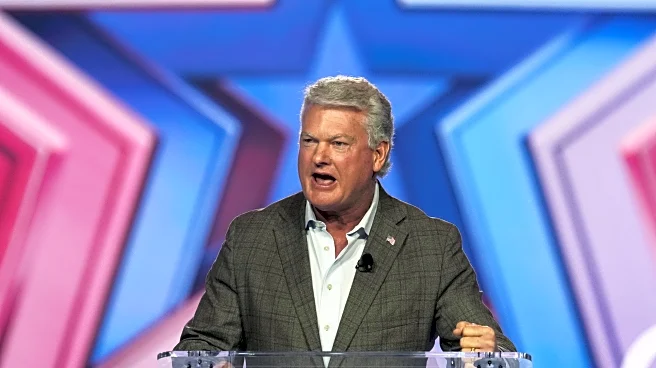
Nate Sheets, following his victory over incumbent Sid Miller in the Republican primary for Texas Agriculture Commissioner, has announced plans to overhaul the Texas Department of Agriculture. Sheets, supported by Governor Greg Abbott and key agricultural
industry groups, aims to remove individuals associated with Miller, whom he describes as 'cancerous.' Sheets' campaign focused on reforming the department to prioritize excellence and service, with a focus on farmers, ranching, and clean food. His victory is seen as a significant rebuke to a sitting Republican official, given Miller's tenure marked by controversies, including allegations of criminality and mismanagement. Sheets, a former U.S. Naval Reserve member and entrepreneur, emphasizes his commitment to integrity and service, aiming to lower costs for farmers and address agricultural challenges such as the New World Screwworm Fly.
Why It's Important?
The outcome of this primary signals a shift in Texas' agricultural leadership, potentially impacting policies and practices within the state's agriculture sector. Sheets' proposed reforms could lead to significant changes in how the department operates, particularly in terms of regulatory practices and support for local farmers. His focus on reducing costs and improving food access aligns with broader agricultural and economic interests in Texas. The support from Governor Abbott and industry leaders suggests a strong backing for Sheets' vision, which could influence future agricultural policies and practices. This development also highlights the political dynamics within Texas, where a Republican incumbent faced substantial opposition from within his own party.
What's Next?
Sheets must now face Democrat Clayton Tucker in the upcoming November election, although historical voting patterns suggest a likely Republican victory. If elected, Sheets plans to collaborate with federal officials and agricultural experts to address pressing issues such as pest control and food program improvements. His strategy includes engaging with rural communities to ensure their needs are met, potentially reshaping the department's focus and priorities. The outcome of the election and subsequent policy implementations could have lasting effects on Texas' agricultural landscape, influencing both local and national agricultural policies.