



What's Happening?
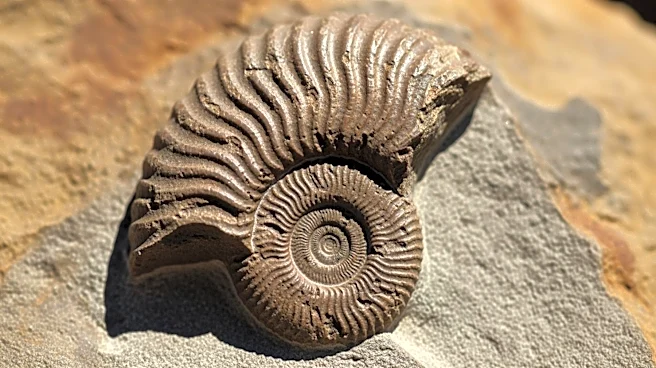
A fossil previously believed to be the oldest octopus ever discovered has been reclassified after new analysis revealed it is not an octopus but a nautiloid. The specimen, known as Pohlsepia mazonensis, was initially identified as an octopus due to its
appearance, which resulted from decomposition before fossilization. Researchers used advanced synchrotron imaging to uncover tooth-like structures within the fossil, leading to the conclusion that it belongs to a group related to modern Nautilus. This discovery, published in Proceedings of the Royal Society B, provides the earliest known example of preserved soft tissue from a nautiloid and alters the timeline for octopus evolution, suggesting octopuses appeared much later during the Jurassic period.
Why It's Important?
The reclassification of Pohlsepia mazonensis significantly impacts the understanding of cephalopod evolution. By identifying the fossil as a nautiloid rather than an octopus, scientists have adjusted the timeline for when octopuses first appeared on Earth. This discovery challenges previous assumptions and provides new insights into the evolutionary history of marine life. The findings highlight the importance of reexamining fossils with modern techniques, which can lead to groundbreaking discoveries and refine scientific knowledge. This has implications for paleontology and evolutionary biology, as it underscores the need for continuous reevaluation of historical data with advanced technology.
What's Next?
The discovery may prompt further investigations into other fossils previously classified based on appearance rather than detailed analysis. Researchers might apply similar imaging techniques to other specimens to uncover hidden structures and refine classifications. This could lead to a broader reevaluation of cephalopod evolution and potentially other marine life forms. The scientific community may also explore the implications of this discovery on the understanding of marine ecosystems during the Mesozoic era, potentially leading to new theories about the evolution of marine biodiversity.
Beyond the Headlines
The reclassification of Pohlsepia mazonensis raises questions about the reliability of fossil identification based solely on appearance. It highlights the role of decomposition in altering the physical characteristics of organisms before fossilization, which can lead to misinterpretations. This discovery emphasizes the importance of using advanced imaging techniques to uncover hidden details that can change scientific narratives. It also reflects the dynamic nature of scientific inquiry, where new technologies can challenge established beliefs and lead to more accurate historical reconstructions.