
What's Happening?
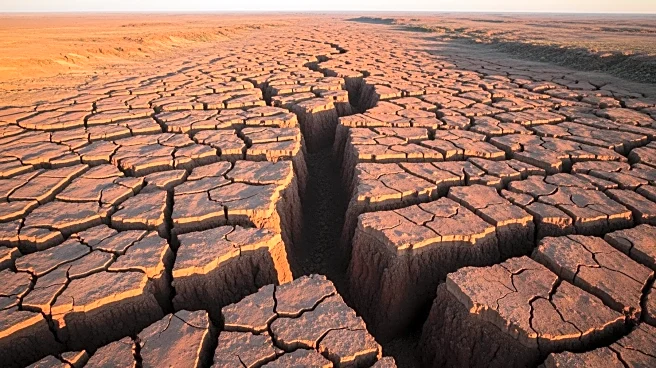
The Horn of Africa is undergoing significant geological changes as the African continent splits along the East African Rift (EAR). This process involves the separation of the Somalian plate from the larger
Nubian plate, with the Afar region in Ethiopia being a critical area where these tectonic plates intersect. Known as a 'triple junction,' the Afar region is one of the few places on Earth where three tectonic rifts—the Ethiopian, Red Sea, and Gulf of Aden Rifts—meet. The Earth's crust in this area is already very thin, and parts of the landscape are below sea level. As the plates continue to move apart, it is anticipated that seawater will eventually rush in to form a new ocean basin. This geological activity is extremely slow, occurring at a rate of approximately 0.28 inches per year, and it will take millions of years for a full ocean to form. However, the process can have more immediate impacts, such as increased seismic and volcanic activity.
Why It's Important?
The geological changes in the Horn of Africa have significant implications for the region and beyond. The formation of a new ocean could alter global geography and impact international maritime routes. In the short term, the tectonic activity poses risks of earthquakes and volcanic eruptions, which could affect local populations and infrastructure. Understanding these processes is crucial for geologists and policymakers to mitigate potential hazards. Additionally, the study of these geological changes provides valuable insights into the Earth's tectonic dynamics, contributing to the broader scientific understanding of plate tectonics and mantle dynamics.
What's Next?
As the tectonic plates continue to move, scientists will likely focus on monitoring seismic and volcanic activity in the region to better predict and prepare for potential natural disasters. Further research into the mantle dynamics beneath the Afar region could provide more detailed insights into the processes driving the continental split. This ongoing research is essential for developing strategies to manage the risks associated with these geological changes and for informing local and international policy decisions related to disaster preparedness and environmental management.
Beyond the Headlines
The splitting of the African continent and the potential formation of a new ocean highlight the dynamic nature of Earth's geology. This process underscores the importance of international collaboration in scientific research, as understanding these changes requires data and expertise from multiple disciplines and countries. The geological activity in the Horn of Africa also raises questions about the long-term environmental and socio-economic impacts on the region, including potential changes in climate patterns and resource distribution. As the Earth's crust continues to evolve, these developments may influence global discussions on environmental sustainability and resource management.