







What's Happening?
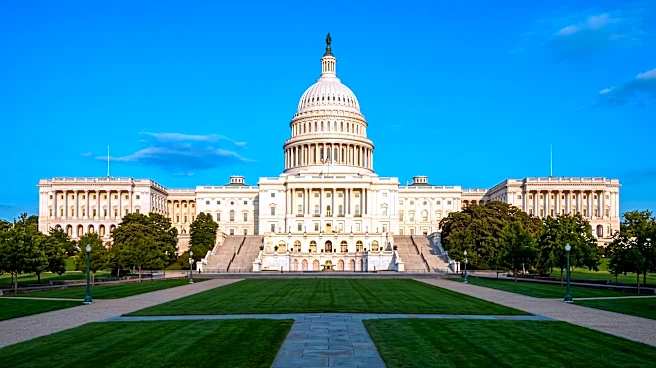
Senator Roger Marshall (R-KS), alongside Representative Greg Murphy (R-NC), has introduced companion versions of the No Surprises Act Enforcement Act (H.R. 4710/S. 2420). This legislative effort aims to address various issues that have emerged since the implementation
of the No Surprises Act in 2022. Insurers, healthcare providers, and employers have identified several challenges with the law's requirements. The proposed bill specifically focuses on increasing penalties for insurers found to be in violation of the No Surprises Act. As of August 20, the House version of the bill has garnered significant bipartisan support, with 36 co-sponsors, indicating growing traction for these legislative fixes ahead of the 2026 midterm elections. The No Surprises Act was initially designed to protect patients from unexpected medical bills from out-of-network providers.
Why It's Important?
The No Surprises Act Enforcement Act is important because it seeks to strengthen consumer protections against surprise medical billing. The original No Surprises Act aimed to shield patients from unforeseen costs, but its implementation has revealed loopholes and compliance issues, particularly concerning insurers. By increasing penalties for non-compliant insurers, the new bill intends to ensure that the spirit of the original law is upheld, potentially leading to fewer unexpected medical bills for patients. This could significantly impact healthcare consumers by providing greater financial predictability and reducing the burden of navigating complex billing disputes. For the healthcare industry, it signals a renewed focus on accountability for insurers, which could lead to adjustments in their billing and network practices. The bipartisan support for the bill also highlights a shared legislative interest in refining healthcare regulations to better serve the public.
What's Next?
The No Surprises Act Enforcement Act is currently gaining traction in the House of Representatives, with 36 bipartisan co-sponsors. The next steps will likely involve further debate and potential amendments in both the House and Senate. Given the bipartisan support, there is a possibility that this package of legislative fixes could advance through Congress. Stakeholders, including patient advocacy groups, healthcare providers, and insurance companies, will be closely monitoring its progress. Insurers may face increased scrutiny and potential financial repercussions if the bill passes, prompting them to review and adjust their compliance mechanisms. The legislative push ahead of the 2026 midterm elections suggests a political imperative to address these healthcare concerns, potentially leading to a more robust enforcement framework for the No Surprises Act.
Beyond the Headlines
Beyond the immediate goal of increasing penalties, this legislative initiative underscores the ongoing challenges in implementing complex healthcare reforms. The need for an 'Enforcement Act' suggests that the initial No Surprises Act, while well-intentioned, did not fully anticipate the practical difficulties and potential for non-compliance within the intricate healthcare ecosystem. This situation highlights the broader tension between legislative intent and real-world application, particularly when dealing with powerful industry players like insurance companies. The bill's focus on penalties also raises questions about the effectiveness of current regulatory oversight and whether existing mechanisms are sufficient to ensure adherence to patient protection laws. It could set a precedent for how future healthcare legislation is designed, emphasizing the importance of robust enforcement provisions from the outset to prevent similar issues from arising.