




What's Happening?
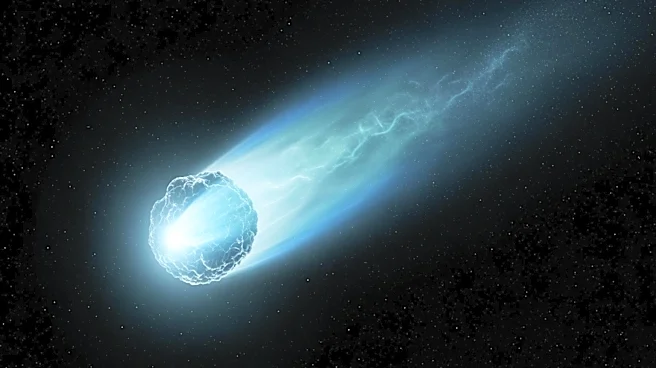
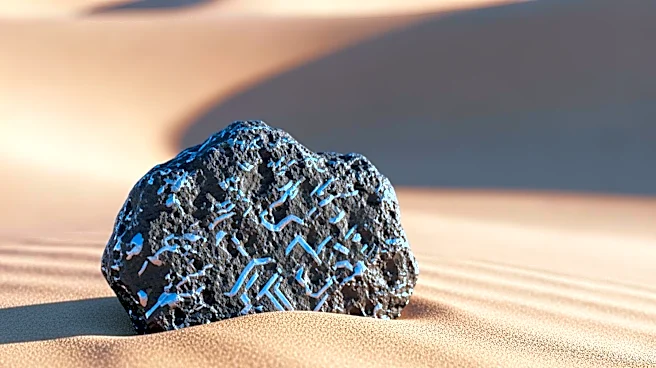
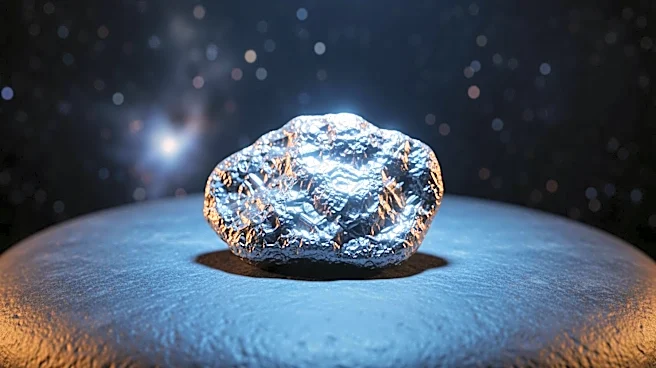
A rare meteorite discovered in the Sahara Desert, known as NWA 12774, may provide evidence of a long-lost protoplanet from the early solar system. This meteorite belongs to the 'angrites' group, which are among the oldest known rocks, forming shortly
after the solar system's inception 4.56 billion years ago. Angrites are characterized by low silica content and contain clinopyroxene, a mineral indicating formation under high pressure. The study suggests that NWA 12774 could be remnants of a protoplanet that was as large as the moon or Mars, which was destroyed in a collision billions of years ago. The findings, published in Earth and Planetary Science Letters, propose that this protoplanet followed a distinct evolutionary path compared to Earth and Mars.
Why It's Important?
The discovery of NWA 12774 offers significant insights into the early solar system's formation and the diversity of planetary bodies that once existed. Understanding the composition and history of such protoplanets can shed light on the processes that led to the formation of current planets, including Earth. This research challenges previous assumptions about the origins of angrites and suggests that they may have originated from larger celestial bodies rather than small asteroids. The study's implications extend to planetary science, offering a new perspective on the materials and conditions that contributed to the development of terrestrial planets.