





What's Happening?
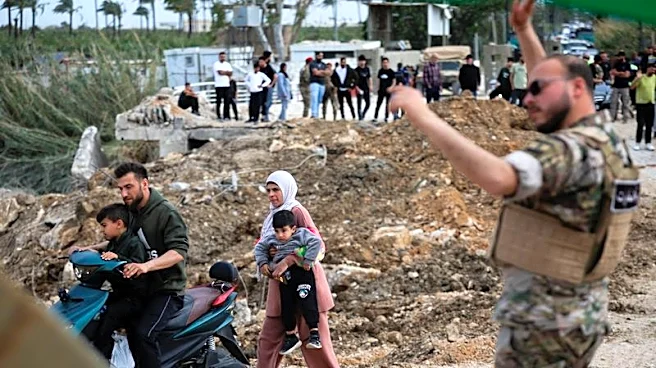
Lebanese civilians have forced their way past barriers on the Al-Qasmiya Bridge over the Litani River, defying warnings from the Israel Defense Forces (IDF) to refrain from returning south. This movement comes after a 10-day ceasefire between Israel and
Lebanon, which began at midnight on Thursday. The ceasefire agreement, facilitated by the U.S., aims to pave the way for further negotiations towards lasting peace. The agreement includes commitments from Lebanon to prevent Hezbollah and other armed groups from attacking Israel, while Israel agrees not to target Lebanese sites unless in self-defense.
Why It's Important?
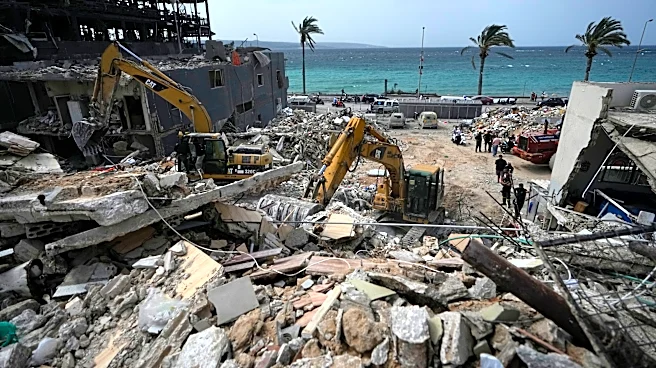
The return of civilians to southern Lebanon highlights the complexities of enforcing ceasefire agreements in conflict zones. The situation underscores the challenges faced by both the Lebanese government and international mediators in ensuring compliance with the terms of the ceasefire. The movement of civilians back to their homes could potentially escalate tensions if not managed carefully, impacting the fragile peace process. This development is crucial as it tests the effectiveness of the ceasefire and the ability of Lebanese authorities to assert control over non-state armed groups like Hezbollah.
What's Next?
The situation may prompt further diplomatic efforts to reinforce the ceasefire and address the concerns of both Israel and Lebanon. The international community, particularly the U.S., may need to engage more actively to ensure that the terms of the ceasefire are upheld. Monitoring the actions of Hezbollah and other groups will be critical in maintaining peace. Additionally, the Lebanese government may face pressure to demonstrate its capability to control its territory and prevent further provocations that could lead to renewed hostilities.