
What's Happening?
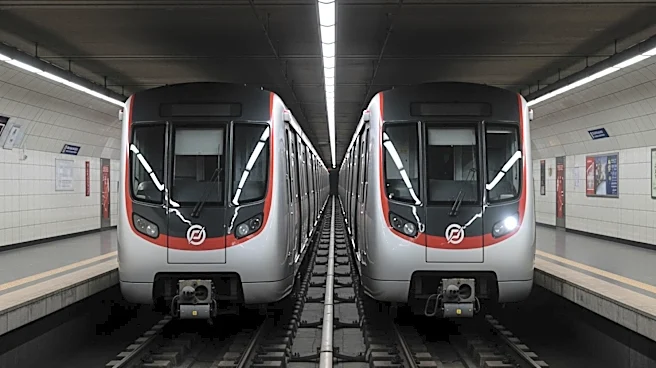
A collision occurred at the Metro Center station in Washington, D.C., involving a work vehicle and a stationary train on the Silver Line. The incident took place shortly after midnight, resulting in 11
individuals sustaining minor injuries. According to the transit system, the affected individuals were able to walk out of the station, and no life-threatening injuries were reported. The crash led to significant disruptions in the morning commute, with limited Silver Line service between Ashburn and Clarendon. Passengers were advised to transfer to the Orange Line for continued travel to New Carrollton and Downtown Largo. The National Transportation Safety Board is investigating the incident, and Metro officials have stated that there were no signs of nefarious actions or infrastructure issues.
Why It's Important?
The incident highlights the vulnerabilities in urban transit systems and the potential for service disruptions that can affect thousands of commuters. The collision underscores the importance of safety protocols and the need for continuous monitoring and maintenance of transit infrastructure. For the Washington, D.C. area, which relies heavily on its metro system for daily commutes, such disruptions can have significant economic and social impacts, affecting productivity and daily schedules. The incident also raises questions about the safety measures in place and the effectiveness of current operational protocols in preventing such occurrences.
What's Next?
The National Transportation Safety Board's investigation will likely focus on identifying the cause of the collision and assessing any lapses in safety protocols. Metro officials have committed to reviewing communications and video footage to understand the sequence of events leading to the crash. The findings could lead to changes in operational procedures or enhancements in safety measures to prevent future incidents. Stakeholders, including local government officials and transit authorities, will be closely monitoring the investigation's outcomes to ensure public confidence in the metro system's safety and reliability.