
What's Happening?
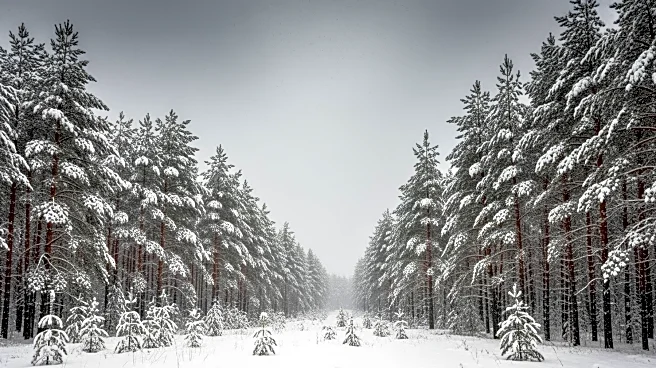
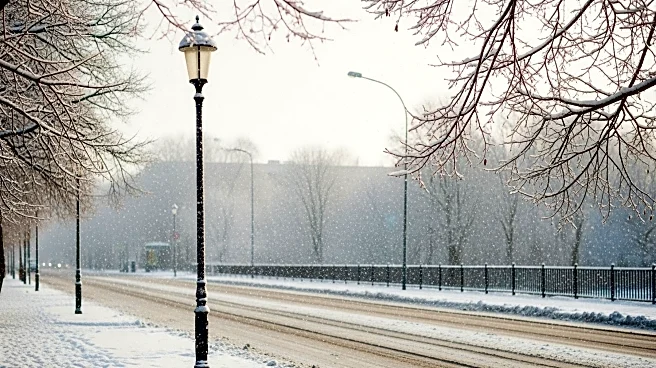
A significant winter storm warning has been issued for parts of Alaska, forecasting up to a foot of snow. The National Weather Service (NWS) in Fairbanks has highlighted the Eastern Alaska Range south of Trims Camp as a high-risk area, with heavy snow expected
along the Richardson Highway. The warning, effective until 9 p.m. AST on Saturday, predicts total snow accumulations of 6 to 12 inches and wind gusts up to 30 mph, which could lead to reduced visibility due to blowing snow. Additional advisories are in place across southcentral Alaska, including Anchorage, Eagle River, and the Matanuska Valley, with expectations of 1 to 3 inches of snow. Coastal and rural areas, such as the Western Arctic Coast and Norton Sound region, are also under advisories for blowing snow and wind gusts up to 50 mph.
Why It's Important?
The winter storm poses significant challenges for transportation and emergency response in Alaska, particularly in remote areas where heavy snowfall and strong winds can lead to hazardous travel conditions. The storm's impact on infrastructure and daily life could be substantial, with potential delays in emergency services and disruptions to local communities. The advisories highlight the need for preparedness among residents and travelers, emphasizing the importance of caution and readiness for potential isolation due to weather conditions. The storm also underscores the broader implications of severe weather patterns in Alaska, affecting local economies and the well-being of residents.
What's Next?
As the storm progresses, residents and authorities will need to monitor weather updates and advisories closely. The NWS will likely continue to provide updates on the storm's trajectory and intensity, advising on safety measures and travel restrictions. Local governments and emergency services may need to coordinate responses to ensure public safety and maintain essential services. The aftermath of the storm could involve cleanup operations and assessments of any damage to infrastructure, with potential implications for future preparedness and response strategies in the region.