






What's Happening?
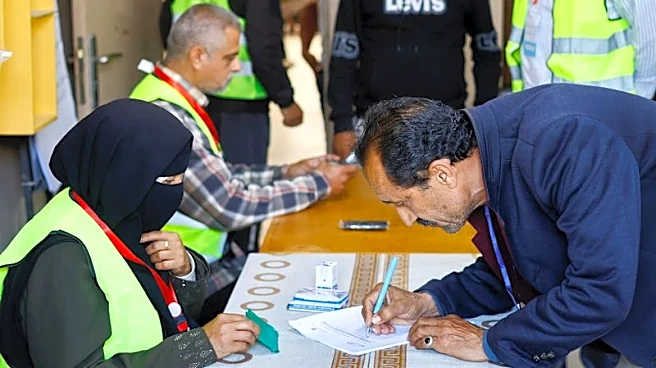
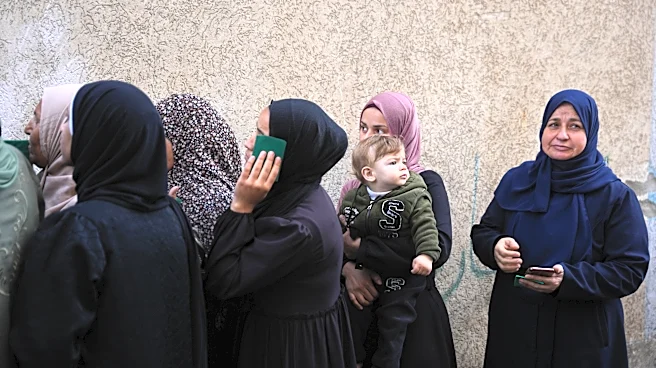
The Palestinian Authority recently conducted local elections in a Gaza community and the West Bank, marking the first such elections in over two decades in Gaza. These elections are seen as a symbolic step towards long-delayed presidential elections and potential
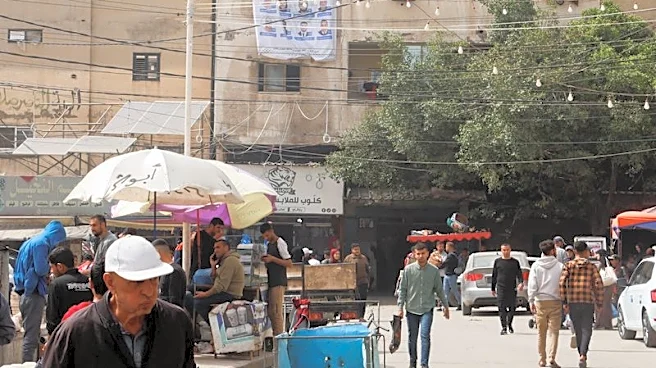
statehood. The elections took place in Deir al-Balah, a central Gaza community, and various parts of the West Bank. Despite a low turnout of 23% in Gaza, attributed to challenges such as displacement and outdated civil records, the elections were considered a success by Palestinian officials. In the West Bank, the turnout was higher at 56%. The elections were for local councils responsible for infrastructure and services, and were dominated by independents and the Fatah faction, which leads the Palestinian Authority. Hamas, which controls parts of Gaza, did not participate in the elections.
Why It's Important?
These local elections are significant as they represent a move towards democratic processes in Palestinian territories, which have not seen presidential elections since 2006. The elections are a response to international pressure for reforms and are intended to pave the way for broader political participation. The Palestinian Authority, led by President Mahmoud Abbas, faces criticism for corruption and lack of legitimacy, and these elections could be a step towards addressing these issues. The elections also highlight the ongoing political fragmentation between the Palestinian Authority and Hamas, which controls Gaza. The international community views these elections as a potential precursor to more comprehensive electoral reforms and a step towards Palestinian statehood, although significant political and security challenges remain.
What's Next?
The Palestinian Authority aims to extend these local elections to other parts of Gaza, with hopes of eventually holding presidential and legislative elections. However, the path forward is complicated by political divisions, particularly with Hamas, and the broader geopolitical context, including Israeli opposition to a Palestinian state. The success of these elections could influence future political strategies and negotiations, both internally and with international stakeholders. The Palestinian leadership will need to address internal divisions and external pressures to advance towards broader democratic reforms and potential statehood.