







What's Happening?
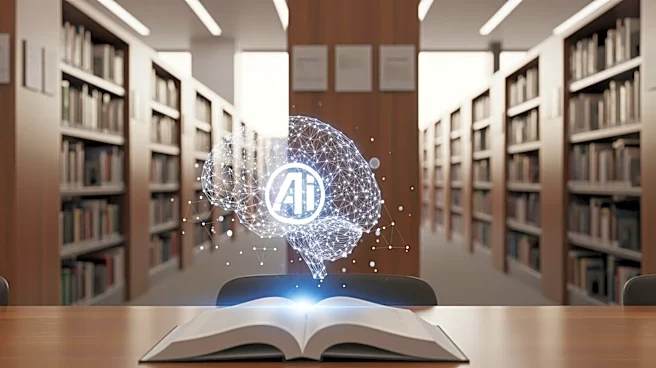
The University of North Carolina at Chapel Hill is partnering with public libraries across the state to enhance AI literacy through a new research initiative. The two-year project, titled Local Libraries and Generative AI, aims to study community responses
to AI and develop tailored educational approaches. The initiative will involve university researchers and local librarians working together to assess technology infrastructure, staff capacity, and community attitudes toward AI. The project will be conducted in two phases, with lessons from the first cohort of libraries informing the approach for the second. This initiative is part of a broader effort in North Carolina to expand AI education, complementing other state projects and national efforts to improve AI literacy through public institutions.
Why It's Important?
This initiative underscores the critical role of libraries as trusted community resources in the digital age. By focusing on AI literacy, the project aims to equip communities with the knowledge and skills needed to navigate and utilize AI technologies responsibly. As AI continues to transform various aspects of society, understanding its implications and applications becomes increasingly important. The collaboration between UNC and public libraries highlights the potential for educational institutions to lead in fostering technological literacy. This project could serve as a model for similar initiatives nationwide, promoting informed and equitable access to AI education.
What's Next?
The project is set to begin this summer and will run through 2028. As the initiative progresses, researchers will gather data and insights from participating libraries, refining their educational strategies based on community feedback. The outcomes of this project could influence future AI literacy programs and policies, both within North Carolina and beyond. The collaboration may also inspire other states to adopt similar approaches, leveraging public libraries as key partners in technological education. As AI continues to evolve, ongoing efforts to enhance public understanding and engagement will be crucial in ensuring that communities can benefit from these advancements.