



What's Happening?
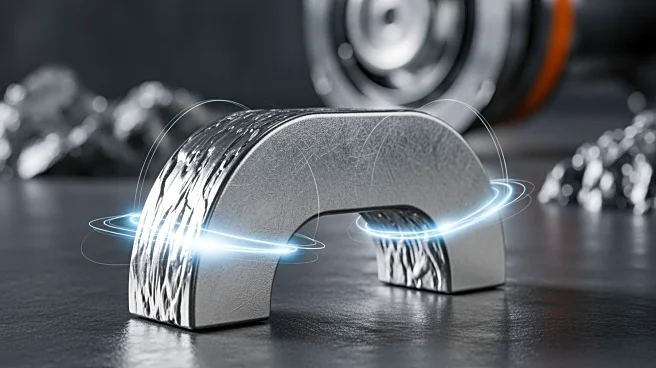
India has approved a 73 billion rupee plan to reduce its dependence on China for rare earth magnets, crucial components in various high-tech applications. The plan aims to produce 6,000 tonnes of permanent magnets annually within seven years to meet domestic
demand. However, India faces challenges due to its lack of industrial expertise and reliance on China for raw materials. Despite having significant rare earth reserves, India currently imports 80-90% of its magnets from China. The country is working to expand its mining and processing capabilities, but experts warn that strategic partnerships and technological advancements are necessary for success.
Why It's Important?
This initiative is crucial for India's strategic autonomy in critical technologies, reducing vulnerability to supply chain disruptions. The plan aligns with global efforts to diversify rare earth supply chains away from China, which dominates the market. Success in this endeavor could bolster India's technological and industrial capabilities, supporting sectors like electric vehicles and renewable energy. However, failure to achieve self-reliance could leave India exposed to geopolitical risks and economic dependencies.
What's Next?
India will need to secure strategic partnerships to import technology and develop its workforce. The government may also need to provide incentives for both manufacturers and buyers to ensure competitiveness against cheaper Chinese imports. The success of this initiative will depend on India's ability to scale up production and develop a comprehensive rare earth ecosystem. Ongoing efforts to expand mining operations and establish a resilient supply chain will be critical in achieving these goals.