






What's Happening?
La Niña, a natural climate pattern originating in the tropical Pacific Ocean, is characterized by cooler-than-usual water in the central and eastern Pacific. This phenomenon alters global wind and atmospheric circulation patterns, leading to significant
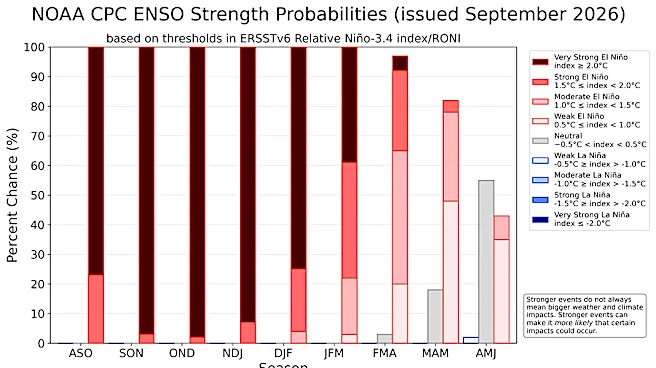
weather impacts far beyond the Pacific region. In East Africa, La Niña conditions are often associated with reduced rainfall and an increased risk of drought. This contrasts with El Niño, which typically brings warmer-than-usual Pacific waters and can lead to wetter conditions and flooding in East Africa. Both El Niño and La Niña are major drivers of global weather variability, influencing rainfall, water supplies, agricultural production, and the prevalence of waterborne diseases.
Why It's Important?
The impact of La Niña on East Africa, particularly the potential for reduced rainfall and drought, has significant humanitarian and economic implications. Somalia, for instance, has experienced severe food insecurity due to consecutive failed rainy seasons, affecting millions of people. Droughts lead to dried-up wells, crop failures, weakened livestock, and rising food prices, devastating livelihoods that depend on agriculture and pastoralism. The economic stability of affected regions is severely undermined, as communities struggle with food shortages and loss of income. This climate pattern highlights the vulnerability of certain regions to global weather phenomena and the critical need for proactive measures to mitigate the effects of climate extremes, rather than relying solely on emergency responses.
What's Next?
To address the challenges posed by La Niña and other climate extremes, there is a growing emphasis on shifting from emergency response to early action. This involves translating climate forecasts into actionable information for communities. For instance, if drier conditions are predicted, authorities and partners should focus on repairing water points, supporting livestock, preparing fodder, and advising farmers on planting schedules. Conversely, if heavy rainfall is expected, communities need to clear drainage channels, monitor river levels, and identify evacuation routes. Effective communication of climate information in local languages through various channels, including radio, mobile phones, and community leaders, is crucial to enable timely and informed decisions at the local level. This proactive approach aims to build resilience and prevent climate warnings from escalating into humanitarian crises.
Beyond the Headlines
The recurring patterns of El Niño and La Niña underscore the complex interplay between oceanic and atmospheric systems and their far-reaching consequences. Beyond the immediate impacts, these climate phenomena highlight the broader challenges of climate change, which can exacerbate the intensity and frequency of extreme weather events. While La Niña is a natural cycle, its effects can be amplified by a warming planet, making communities even more vulnerable. This situation calls for a deeper understanding of climate science and its integration into long-term development strategies. It also raises ethical questions about global responsibility, as countries with lower carbon footprints often bear the brunt of climate-induced disasters. Investing in climate adaptation, early warning systems, and sustainable resource management is not just an economic necessity but a moral imperative to protect vulnerable populations worldwide.