






What's Happening?
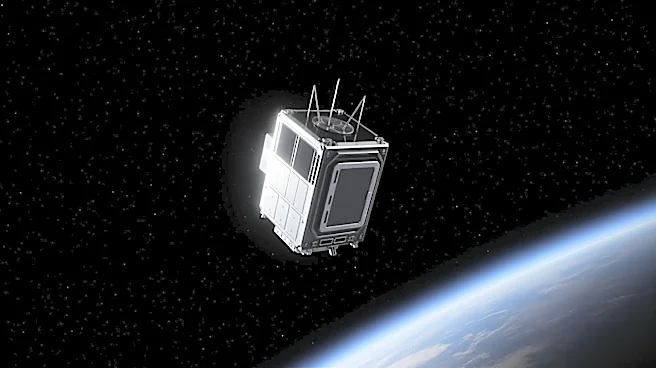
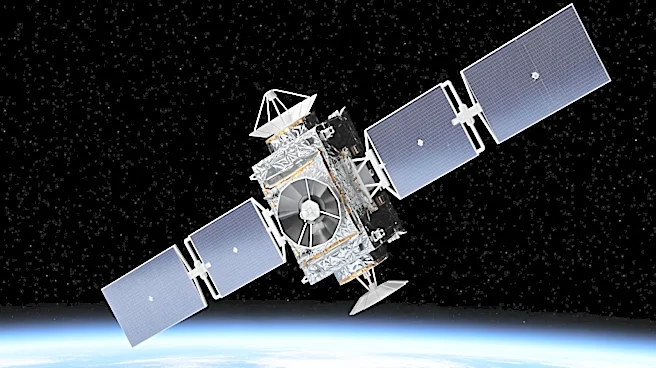
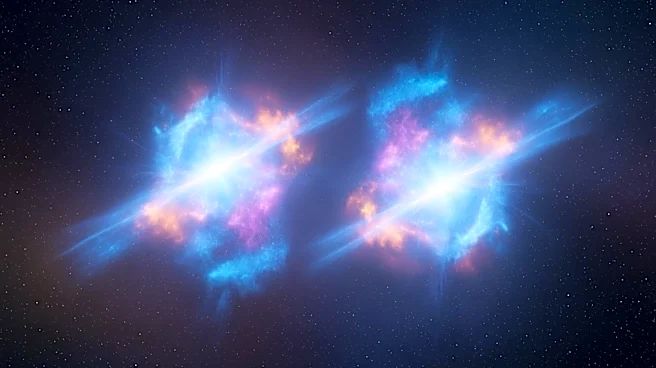
NASA's Fermi Gamma-ray Space Telescope has uncovered evidence suggesting that two supernova remnants, the Jellyfish Nebula and G189.6+3.3, may have originated from a binary star system. The study indicates that the explosions of these stellar siblings
occurred thousands of years apart, with the first star's detonation sending its companion through space before it too exploded. This discovery provides the first known example of a binary system where both stars have undergone supernova explosions. The findings were presented at the American Astronomical Society meeting and will be published in Nature Communications.
Why It's Important?
The identification of sibling supernova remnants offers new insights into the life cycles of massive stars and the dynamics of binary systems. Understanding how these stars evolve, exchange matter, and explode as supernovae is crucial for astrophysics. The study also highlights the role of supernova remnants as cosmic particle accelerators, contributing to our knowledge of cosmic rays and gamma-ray production. This research enhances our understanding of the universe's fundamental processes and the forces shaping stellar evolution.
Beyond the Headlines
The discovery of a binary system with dual supernova remnants provides a unique opportunity to study the interactions between massive stars and their environments. The overlapping remnants and their interactions with interstellar gas offer a powerful laboratory for understanding how supernovae influence their surroundings. This research could lead to new insights into the mechanisms driving cosmic particle acceleration and the formation of gamma rays, furthering our understanding of the universe's energetic phenomena.