
What's Happening?
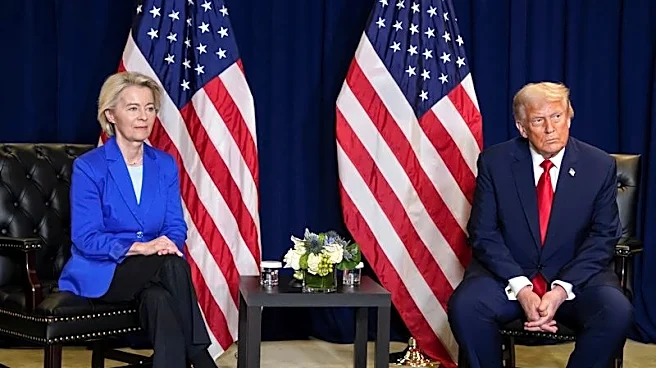
President Trump has expressed frustration over the European Union's delay in implementing a trade deal agreed upon last year. The deal, which was supposed to lower tariffs on European imports to the U.S.
to a maximum of 15%, has faced setbacks due to various disputes, including legal challenges and geopolitical tensions. Trump has given the EU until July 4, 2026, to fulfill their side of the agreement, which includes cutting tariffs on American goods to zero. Failure to comply could result in the U.S. imposing much higher tariffs on EU imports. This ultimatum follows a Supreme Court ruling that deemed many of Trump's existing tariffs unlawful, adding to the complexity of the situation.
Why It's Important?
The delay in implementing the trade deal has significant implications for transatlantic trade relations. Higher tariffs could disrupt trade flows, affecting industries on both sides of the Atlantic. U.S. businesses that rely on European imports may face increased costs, while European exporters could lose competitiveness in the U.S. market. The situation also highlights the broader challenges in international trade negotiations, where geopolitical tensions and legal hurdles can impede progress. The outcome of this standoff could set a precedent for future trade agreements and impact global economic stability.
What's Next?
If the EU fails to meet the July 4 deadline, the U.S. is likely to impose higher tariffs, escalating trade tensions. This could prompt retaliatory measures from the EU, further straining relations. Both sides may seek diplomatic solutions to avoid a trade war, but the path forward remains uncertain. Stakeholders, including businesses and policymakers, will be closely monitoring developments, as the outcome could influence future trade policies and economic strategies.