






What's Happening?
California homeowners in specific high-risk areas could soon be required to implement new landscaping changes under proposed 'Zone 0' wildfire regulations. The California Board of Forestry and Fire Protection is set to consider adopting these regulations on August
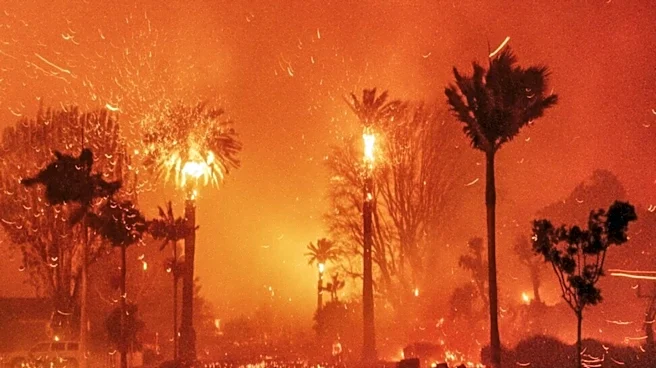
19, with potential implementation as early as next month. These rules target the immediate five feet around a home, an area where wind-blown embers often accumulate and ignite structures. Homeowners would need to remove combustible materials like fallen leaves, woodchips, and dead or dying branches. Additionally, there would be requirements for maintaining plants and trees, ensuring live tree branches are at least 10 feet from chimneys, and using non-combustible pots for plants. Changes to fences and sheds, such as replacing wooden gates with metal ones, may also be mandated. These regulations are part of California's broader wildfire resilience strategy, building upon existing 'Zone 1' and 'Zone 2' defensible space requirements.
Why It's Important?
The proposed 'Zone 0' regulations represent a significant shift in California's approach to wildfire defense, aiming to directly protect residential structures from ember ignition, which is a primary cause of home loss during wildfires. By focusing on the immediate perimeter of a home, these rules address a critical vulnerability that existing defensible space guidelines may not fully cover. This policy could substantially reduce property damage and loss of life in wildfire-prone areas, strengthening community resilience. The economic impact could be considerable, as homeowners will incur costs for compliance, but these costs are likely to be offset by reduced insurance premiums and avoided losses from wildfires. This proactive measure reflects the escalating threat of wildfires in California and the necessity for comprehensive, statewide strategies to adapt to a changing climate and protect vulnerable communities.
What's Next?
The California Board of Forestry and Fire Protection will vote on the final draft of the 'Zone 0' regulations on August 19. If approved, the regulations could go into effect in September. For new construction, the requirements will apply immediately. Existing homes and structures will face a phased implementation: Phase 1, within the first three years, will focus on removing combustible items and trimming trees. Phase 2, within five years, will involve creating an 'under-eave safety zone' and making necessary changes to sheds and fencing. Property owners in State Responsibility Areas and Very High Fire Hazard Severity Zones in Local Responsibility Areas will be impacted. Local fire agencies may authorize alternative practices, provided they achieve similar safety outcomes. The success of these regulations will depend on effective enforcement, homeowner education, and community buy-in.
Beyond the Headlines
The 'Zone 0' policy highlights a growing trend towards individual responsibility in climate adaptation, placing a direct burden on homeowners to mitigate wildfire risks. This raises questions about equity, as lower-income homeowners may struggle with the financial and logistical demands of compliance. The policy also underscores the evolving legal and ethical landscape of property rights versus public safety in the face of environmental hazards. While the regulations are designed to protect homes, they also represent a cultural shift in how Californians interact with their immediate environment, moving towards a more fire-conscious landscaping aesthetic. The long-term success of 'Zone 0' will not only be measured by reduced structure loss but also by its ability to foster a collective sense of responsibility and adaptation within communities, potentially influencing similar policies in other wildfire-prone regions across the U.S. and globally.