







What's Happening?
The Soil Association's decision to withdraw organic certification from British salmon farming highlights a broader issue: simply applying organic or 'free-range' labels does not inherently resolve the fundamental welfare and environmental problems associated
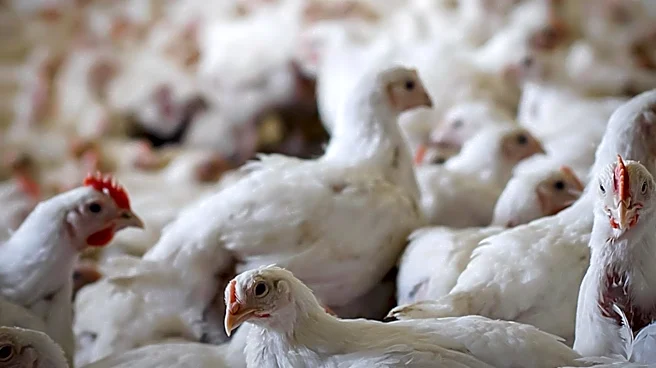
with industrial-scale animal confinement, often referred to as factory farming. Despite attempts to improve standards, such as lower stocking rates and prohibitions on certain chemical treatments, organic salmon farms have shown similar mortality rates to conventional farms and have not significantly improved the quality of life for salmon. Environmental concerns, including harm to marine ecosystems, also persist. This situation mirrors issues seen with 'free-range' hens, where improved welfare is sometimes used as a marketing tactic without addressing deeper systemic problems.
Why It's Important?
This development is important for U.S. consumers and the agricultural industry as it challenges the perception that organic or 'free-range' labels automatically guarantee superior animal welfare and environmental sustainability. It suggests that these labels, while often implying better conditions, may not be sufficient to overcome the inherent issues of industrial animal agriculture. For consumers, it raises questions about the efficacy of current labeling standards and the true impact of their purchasing decisions. For the agricultural sector, it indicates a growing demand for more comprehensive changes beyond marginal improvements, potentially pushing for more radical shifts in farming practices or even a move towards plant-based alternatives. The critique implies that the current system, even with 'better' labels, is still fundamentally flawed in preventing animal suffering and protecting the environment.
What's Next?
The ongoing debate about the effectiveness of organic and 'free-range' labels could lead to increased scrutiny of animal agriculture practices and labeling standards in the U.S. Consumers may become more discerning, demanding greater transparency and more robust welfare and environmental guarantees from food producers. This could pressure regulatory bodies to re-evaluate and strengthen certification criteria for animal products. Animal advocacy groups are likely to continue promoting veganism as a more comprehensive solution to the welfare and environmental challenges posed by factory farming. The industry might face calls for more significant reforms, potentially moving beyond incremental changes to explore entirely new models of food production that prioritize animal well-being and ecological health.
Beyond the Headlines
The discussion extends beyond mere labeling to the core philosophy of animal agriculture. The argument that even 'responsible' segments of the industry fail to prevent suffering or protect the environment suggests a systemic problem. This could fuel a broader societal conversation about the ethical implications of consuming animal products and the long-term sustainability of current food systems. It highlights the influence of marketing in shaping consumer perceptions and the potential for 'greenwashing' or 'humane-washing' in the food industry. Ultimately, this critique encourages a deeper examination of our relationship with animals and the environment, potentially accelerating the shift towards plant-based diets and more sustainable food production methods.