







What's Happening?
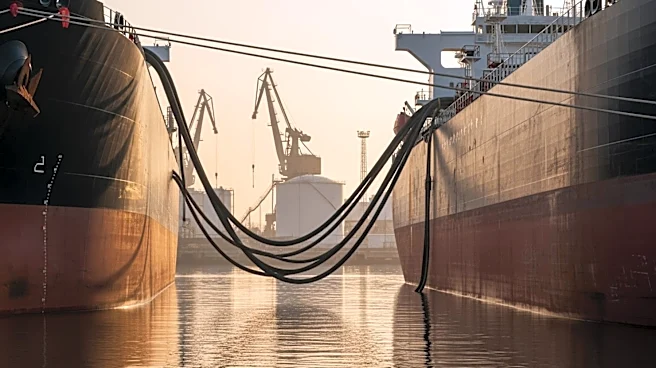
Italy's oil and gas producer ENI has completed the loading of a Venezuelan heavy crude oil cargo, marking the first such shipment to Spain in nearly two years. This development follows a landmark supply agreement reached between Caracas and Washington
in January, which has facilitated the handling of Venezuela's oil exports by trading houses such as Trafigura, Vitol, and ENI. The cargo was loaded onto the Front Cruiser, a tanker flying the Marshall Islands flag, at Venezuela's Jose terminal and is now en route to Cartagena, Spain. This shipment is part of a broader strategy to diversify export destinations for Venezuela's state oil company PDVSA, which can now send oil to various international markets.
Why It's Important?
The resumption of Venezuelan oil exports to Europe signifies a significant shift in international energy trade dynamics, particularly in the context of geopolitical tensions and energy security concerns. For Venezuela, this development represents a crucial opportunity to revitalize its oil industry, which has been hampered by years of sanctions and economic challenges. For European countries, the import of Venezuelan crude offers an alternative energy source amid ongoing efforts to reduce dependency on Russian oil. This move could potentially stabilize energy prices and supply chains in Europe, providing a buffer against market volatility. Additionally, the involvement of major trading houses underscores the strategic importance of Venezuelan oil in global markets.
What's Next?
As Venezuela continues to expand its oil export capabilities, further shipments to Europe and other regions are likely. This could lead to increased diplomatic engagements between Venezuela and European nations, potentially easing some of the economic sanctions imposed on the South American country. The success of this initial shipment may encourage other international oil companies to explore similar agreements, further integrating Venezuela into the global oil market. However, the geopolitical implications of these developments will require careful navigation, particularly in relation to U.S. foreign policy and its impact on international trade agreements.