


What's Happening?
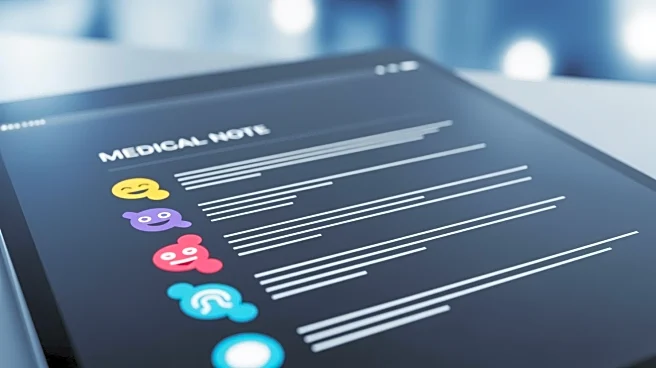
A study conducted by researchers at the University of Michigan Medical School has highlighted the growing use of emojis in medical notes and patient portal messaging. The research analyzed 218.1 million electronic health record clinical notes from Michigan Medicine,
covering the period from 2020 to 2025. The study found that emojis were most frequently used in patient portal messages, accounting for 35.5% of usage, followed by telephone encounters and encounter summaries. The most common emojis included the smiling face with smiling eyes, telephone receiver, and calendar. The study also noted that emoji use was highest in communications with patients aged 10 to 19, with a significant occurrence in messages to those aged 70 to 79. The researchers observed that while emoji use in clinical notes was initially stable, it increased significantly by 2025.
Why It's Important?
The integration of emojis into medical communication reflects a shift towards more informal and potentially more relatable interactions between healthcare providers and patients. This trend could enhance patient engagement, particularly among younger demographics who are accustomed to digital communication. However, the use of emojis also raises concerns about misinterpretation, especially across different age groups. The study's findings suggest a need for healthcare institutions to develop guidelines to ensure that emojis are used effectively and appropriately in clinical documentation. As digital communication continues to evolve, understanding the role of emojis in healthcare could improve patient-provider communication and overall patient satisfaction.
What's Next?
The researchers hope that their findings will prompt further investigation into the role and impact of emojis in clinical communication. Future studies could explore how emojis affect patient understanding and engagement, as well as the potential for miscommunication. Healthcare institutions may consider developing standardized guidelines for emoji use in medical documentation to mitigate risks and enhance communication. As the digital landscape continues to evolve, the healthcare industry may increasingly adopt new communication tools to meet patient expectations and improve care delivery.
Beyond the Headlines
The use of emojis in medical communication highlights broader cultural shifts towards digital and visual communication methods. This trend reflects a generational change in communication preferences, with younger individuals more likely to use and expect emojis in their interactions. The study also underscores the importance of adapting healthcare communication strategies to meet the needs of diverse patient populations. As technology continues to influence healthcare, understanding and leveraging these changes could lead to more personalized and effective patient care.