




What's Happening?
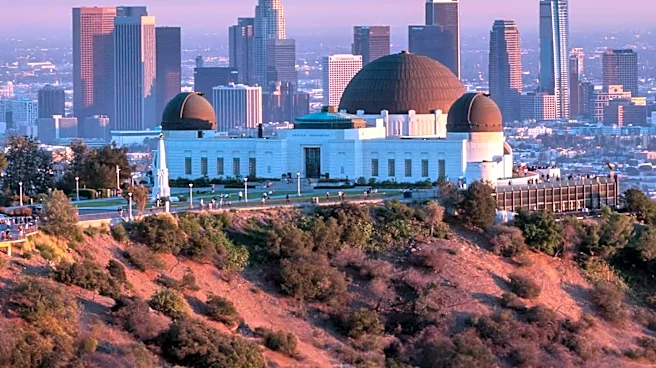
Residents in the Victor Heights neighborhood of Los Angeles are experiencing significant frustration due to large crowds gathering on a hilltop street that offers a panoramic view of the city skyline. The intersection of Figueroa Terrace and Centennial
Street, located just south of Dodger Stadium, has historically been a popular spot for professional filming and amateur photography. However, with the rise of viral media, the area has become a magnet for social media enthusiasts, attracting dozens of visitors day and night. This influx of people has led to increased traffic, late-night noise, and disruptions for families living nearby, including one with a 3-year-old requiring oxygen. Residents have voiced their concerns at public safety meetings and are now organizing to form a community association and potentially a neighborhood watch to address the issue. A representative for Councilmember Eunises Hernandez's office stated that they are working with city departments to enforce safety and order and limit visitors, but no concrete solutions have been provided yet.
Why It's Important?
This situation highlights the growing challenges faced by urban residential areas in the era of viral social media and the 'influencer' economy. What was once a local scenic spot has transformed into a high-traffic destination, impacting the quality of life for long-term residents. The conflict underscores the tension between public access to scenic views and the right of residents to peace and quiet in their homes. It also brings to light the struggle of local governments to adapt to rapid changes in public behavior driven by digital trends. The inability of city officials to provide immediate solutions suggests a gap in current urban planning and public safety strategies for managing unexpected surges in tourism or visitation to residential zones. This issue could set a precedent for how other cities handle similar situations where residential tranquility is disrupted by viral popularity, potentially leading to new regulations or community-led initiatives to protect neighborhood integrity.
What's Next?
Victor Heights residents are actively pursuing self-organized solutions, including the formation of a community association and a neighborhood watch, to mitigate the disruptions caused by the crowds. These initiatives aim to empower residents to take direct action in safeguarding their community's peace and order, given the perceived lack of immediate governmental intervention. Councilmember Eunises Hernandez's office is reportedly collaborating with city departments to develop strategies for enforcing safety and managing visitor numbers, though a definitive plan remains unannounced. The ongoing dialogue between residents and city officials will likely continue, with residents pushing for more concrete and effective measures. The outcome of these efforts could influence how other Los Angeles neighborhoods, and potentially other U.S. cities, address similar challenges arising from the viral popularity of residential locations, potentially leading to new policies regarding public access, noise control, and traffic management in such areas.
Beyond the Headlines
The situation in Victor Heights extends beyond mere nuisance, touching upon broader societal shifts in how public spaces are perceived and utilized in the digital age. The phenomenon of 'viral tourism' driven by social media platforms like TikTok transforms quiet residential streets into transient attractions, often without consideration for the existing community. This raises ethical questions about the responsibility of social media users and platforms in promoting locations that may not be equipped to handle large influxes of visitors. Legally, it challenges existing urban planning and public safety frameworks, which may not adequately address the rapid and unpredictable nature of viral trends. Culturally, it reflects a tension between the desire for unique experiences and content creation, and the preservation of local community character and resident well-being. The long-term implications could include increased calls for stricter regulations on public gatherings in residential areas, innovative urban design solutions to manage visitor flow, and a re-evaluation of how cities balance tourism promotion with resident quality of life.