






What's Happening?
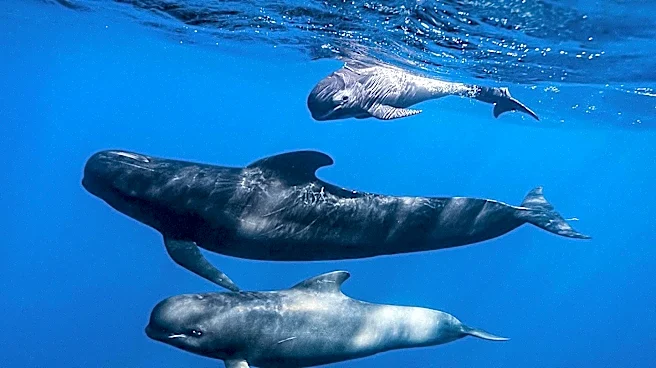
A new study led by Kristi West from the University of Hawaiʻi at Mānoa's Health and Stranding Lab has revealed an alarming rate of plastic ingestion among short-finned pilot whales in Hawaiian waters. Analyzing stranded whales over a 13-year period, researchers
found that 23% of the examined pilot whales had plastic debris in their stomachs, a higher incidence rate than reported for this species anywhere else globally. The ingested plastic often consisted of large pieces, comparable in size to an iPad or a shopping bag, with one whale found to have consumed over 35,000 pieces of plastic. This debris, primarily abandoned, lost, or discarded fishing gear, remains in the whales' stomachs, displacing food and negatively impacting their long-term health and nutrition. Short-finned pilot whales, though named whales, are a type of dolphin and are considered 'sentinels of ocean health,' providing early warning signals about marine ecosystem issues.
Why It's Important?
This study highlights a critical environmental issue with significant implications for marine ecosystems and potentially human health. The high incidence of plastic ingestion in Hawaiian pilot whales underscores the severity of marine plastic pollution, particularly from fishing gear, in the region. As 'sentinels of ocean health,' the distress of these whales signals broader ecological problems that could affect other marine species, including those consumed by humans. The accumulation of plastic in the food chain can lead to bioaccumulation of toxins, posing risks to marine biodiversity and potentially impacting human food security and health through seafood consumption. The study also emphasizes the unique vulnerability of pilot whales, suggesting that their feeding habits or other biological factors make them more susceptible to plastic pollution compared to other dolphin and whale species in Hawaii. Addressing this issue requires urgent action to reduce plastic waste and improve waste management practices, especially concerning fishing gear.
What's Next?
The findings of this study are expected to intensify calls for more robust marine conservation efforts and stricter regulations on plastic waste, particularly fishing gear, in Hawaii and globally. Researchers will likely continue to monitor marine mammal populations to track the long-term effects of plastic pollution and identify specific sources of debris. Conservation organizations and government agencies may use this data to develop targeted interventions, such as promoting sustainable fishing practices, implementing gear retrieval programs, and enhancing public awareness campaigns about the dangers of marine plastic. There could also be increased pressure on manufacturers to develop more biodegradable or recyclable fishing gear. The study's results may also inform policy discussions at local, national, and international levels regarding plastic reduction targets and ocean cleanup initiatives, aiming to mitigate the ongoing threat to marine life.
Beyond the Headlines
The issue of plastic pollution in marine life extends beyond the immediate harm to individual animals; it represents a systemic challenge to global environmental health and sustainability. The presence of thousands of plastic pieces in a single whale's stomach illustrates the pervasive nature of human-generated waste and its far-reaching consequences. This problem highlights the concept of 'ghost fishing,' where abandoned fishing gear continues to trap and kill marine animals for decades. The study also implicitly raises questions about consumer responsibility and industrial practices, urging a re-evaluation of our relationship with plastic. The long-term shifts triggered by such pollution include potential alterations in marine food webs, ecosystem imbalances, and the degradation of critical ocean habitats. Addressing this requires not just cleanup efforts but a fundamental shift towards a circular economy model that minimizes waste generation and maximizes resource recovery, emphasizing the interconnectedness of human activities and environmental well-being.