



What's Happening?
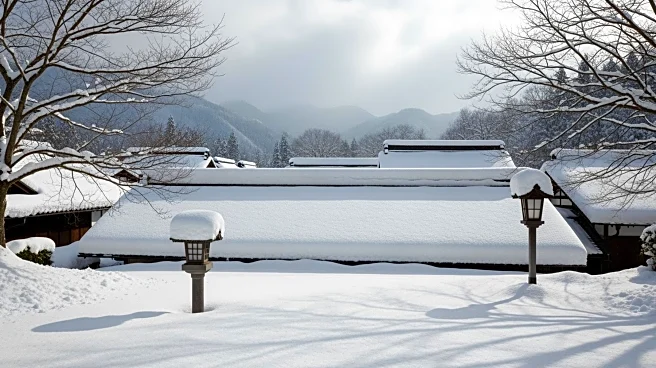
Japan has experienced record-breaking snowfall, resulting in 35 deaths and nearly 400 injuries. The heavy snow has caused significant disruptions, including power outages and transportation delays. Most fatalities occurred as individuals attempted to
clear snow from their properties. The snowfall has affected 15 prefectures, with snow depths reaching up to 6.5 feet. Authorities warn that rising temperatures could lead to further accidents due to melting snow and potential avalanches.
Why It's Important?
The severe weather conditions in Japan highlight the challenges posed by extreme weather events, which are becoming more frequent due to climate change. The impact on infrastructure and public safety underscores the need for improved emergency response and preparedness measures. The situation also raises concerns about the resilience of communities and the need for adaptive strategies to cope with such events. The economic implications are significant, affecting transportation, energy supply, and local economies.
What's Next?
As temperatures rise, the risk of avalanches and slippery conditions increases, prompting authorities to urge caution. Emergency services are coordinating efforts to ensure access to affected areas, and ongoing monitoring of weather conditions is crucial. Long-term, there may be a push for infrastructure improvements and policy changes to enhance resilience against extreme weather. The situation serves as a reminder of the importance of climate adaptation strategies in mitigating the impacts of such events.