
What's Happening?
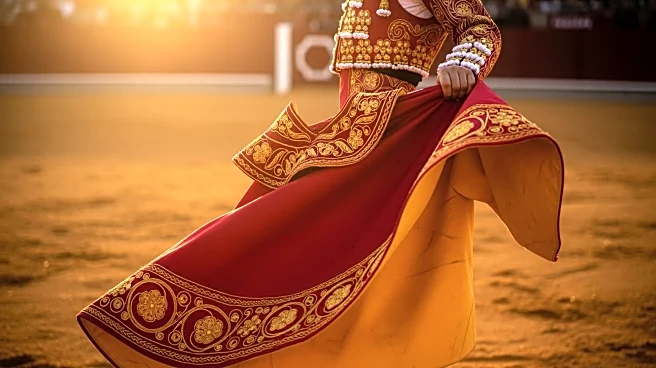
Miriam Cabas, a 24-year-old matador from Los Barrios, Spain, achieved a significant milestone in her bullfighting career by successfully killing two bulls and receiving three ears as trophies during a major
event in Cádiz. This marked her first encounter with bulls antagonized by picadors, a crucial step in her professional training. Cabas, who began bullfighting at the age of five, is one of the few women to reach this level in the traditionally male-dominated sport. Her victory was documented by British photographer Owen Harvey, who has been following her career as part of a series on young matadors. Despite the political controversy surrounding bullfighting in Spain, Cabas remains focused on her craft and avoids explicit political affiliations.
Why It's Important?
Cabas's success in bullfighting highlights the ongoing gender barriers in traditional sports and the cultural significance of bullfighting in Spain. Her achievements challenge the male-dominated norms of the sport and provide a role model for aspiring female matadors. The event also underscores the political tensions in Spain, where bullfighting is both celebrated as a cultural heritage and criticized for animal cruelty. Cabas's neutral stance on politics and her focus on the sport itself reflect a broader trend of athletes navigating complex cultural and political landscapes while pursuing their careers.
What's Next?
Cabas plans to continue her bullfighting career while balancing her studies to become a veterinarian. Her future performances will likely draw attention to the evolving role of women in bullfighting and the ongoing debate over the sport's place in modern society. As she progresses, Cabas may face increased scrutiny from both supporters and critics of bullfighting, potentially influencing public discourse on gender and cultural traditions in Spain.
Beyond the Headlines
Cabas's journey also raises questions about the ethical implications of bullfighting and the responsibilities of athletes in politically charged environments. Her decision to focus on the sport rather than engage in political discourse highlights the personal and professional challenges faced by athletes in maintaining their cultural identity while addressing contemporary ethical concerns.