



What's Happening?
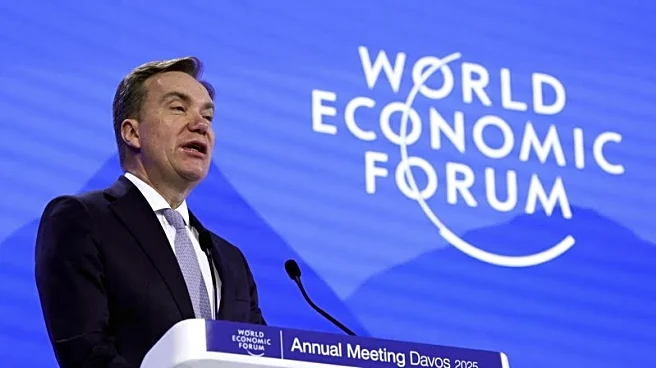
Børge Brende, the president and CEO of the World Economic Forum (WEF), has resigned following revelations of his past connections with Jeffrey Epstein. Brende admitted to dining with Epstein on three occasions between 2018 and 2019, which led to an independent
review by the WEF. Despite the review finding no additional concerns, Brende decided to step down to allow the organization to continue its work without distractions. His resignation adds to a growing list of prominent figures distancing themselves from Epstein, including Larry Summers and Thomas Pritzker, who have also faced scrutiny over their associations with the disgraced financier.
Why It's Important?
Brende's resignation highlights the ongoing impact of the Epstein scandal on global leaders and institutions. The WEF, known for its influential annual meetings in Davos, faces reputational challenges as it navigates the fallout from these revelations. The departure of its leader could lead to shifts in the organization's focus and leadership dynamics. This development underscores the broader implications of the Epstein scandal, affecting not only individuals but also the credibility and operations of major global institutions. Stakeholders in the WEF and similar organizations may need to reassess their governance and ethical standards to maintain public trust.
What's Next?
The WEF will likely initiate a search for a new leader who can steer the organization through this period of scrutiny and maintain its global influence. The leadership transition may involve strategic shifts to reinforce the WEF's commitment to transparency and ethical governance. Observers will be watching how the WEF addresses these challenges and whether it can restore confidence among its members and the public. The broader implications for other institutions linked to Epstein may also unfold, as they reassess their connections and governance practices in light of public and legal scrutiny.