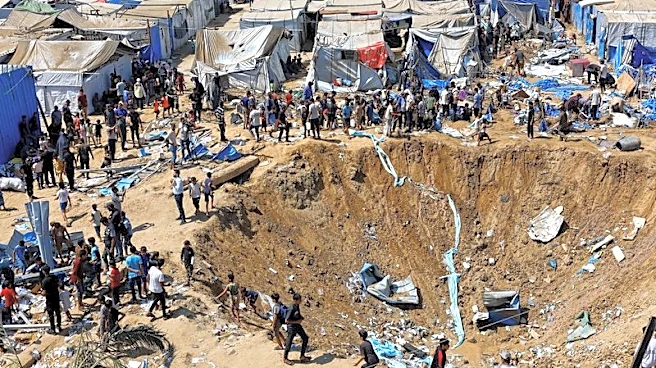








What's Happening?
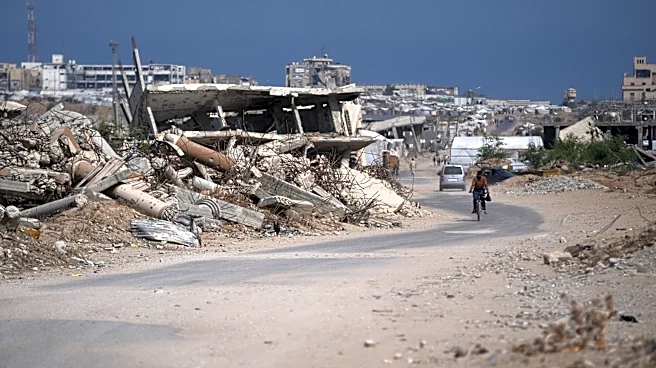
The ongoing conflict in Gaza has severely impacted the training and development of young doctors, leaving a generation of medical professionals in a state of stagnation. With hospitals destroyed and borders closed, medical training programs have come
to a halt, forcing young doctors like Dr. Ahmed to work long volunteer shifts without the opportunity to specialize. The destruction of Gaza's healthcare infrastructure has not only affected immediate medical services but also the future of medical education and expertise in the region. Local initiatives have emerged to provide some training, but they cannot replace the comprehensive education needed to develop specialists. The situation highlights the broader humanitarian crisis in Gaza, where the conflict has disrupted not only physical infrastructure but also the potential for future growth and development.
Why It's Important?
The stagnation of medical training in Gaza has long-term implications for the region's healthcare system and its ability to recover from the ongoing conflict. The lack of specialized training opportunities means that Gaza will face a shortage of medical specialists in the future, hindering efforts to rebuild its healthcare infrastructure. This situation underscores the broader impact of the conflict on human capital and the potential for societal recovery. The international community's response to this crisis will be crucial in determining whether Gaza can rebuild its healthcare system and provide adequate medical services to its population. The plight of Gaza's young doctors also highlights the need for sustained international support and intervention to address the humanitarian and educational challenges facing the region.
Beyond the Headlines
The challenges faced by Gaza's young doctors reflect a deeper issue of human potential being stifled by conflict. The inability to progress in their careers not only affects individual doctors but also the broader society's capacity to heal and rebuild. The loss of a generation of medical professionals could have lasting effects on Gaza's healthcare system, making it difficult to address future medical needs. This situation raises ethical questions about the responsibility of the international community to support regions affected by conflict and ensure that essential services like healthcare are maintained. The story of Gaza's young doctors serves as a reminder of the human cost of conflict and the importance of investing in education and training to support recovery and development.