

What's Happening?
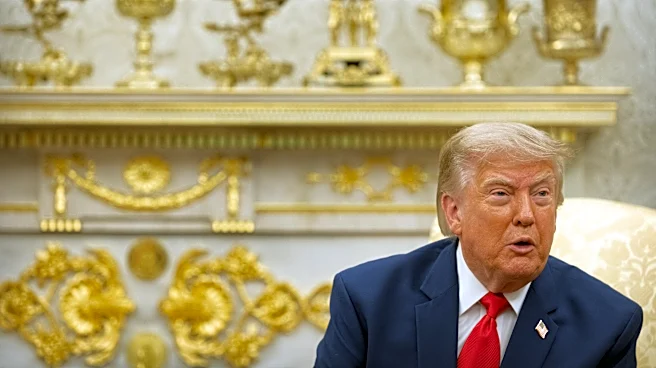
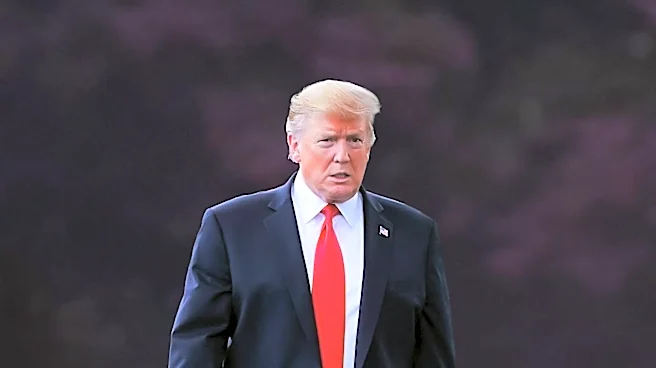
President Trump's health has become a subject of public speculation and social media discussion, fueled by observations of his physical appearance and recent poll results. Reports have highlighted bruises on his hands, swelling around his ankles, and a rash
on his neck. These physical signs have led to various comments and online mockery, with some social media users questioning his overall well-being. For instance, a video clip showing President Trump's rear end sparked widespread speculation about his health, including the possibility of incontinence. Tennis legend Martina Navratilova and independent progressive journalist Aaron Rupar were among those who commented on the video. The White House has previously attributed hand bruises to a daily aspirin regimen and frequent handshaking, and ankle swelling to chronic venous insufficiency. A neck rash was explained as a result of a 'very common cream' for 'preventative skin treatment.' Despite these explanations, the public discourse continues to focus on his health.
Why It's Important?
The ongoing speculation about President Trump's health carries significant implications for public perception and political discourse, especially given his age and prominent role. A recent April poll indicated that 55 percent of U.S. adults surveyed did not believe President Trump was in good enough physical health to effectively serve as president, a notable increase from 40 percent in January 2024. This public sentiment can influence voter confidence and potentially impact future political campaigns. Concerns about a leader's health can also create uncertainty in national and international affairs, as the stability and capability of the presidency are often linked to the incumbent's physical and mental fitness. The lack of official, comprehensive health reports from the White House further fuels speculation, leaving the public to rely on observations and unofficial commentary, which can be prone to misinterpretation and rumor.
What's Next?
The continued public and media scrutiny of President Trump's health is likely to persist, particularly as he remains a prominent figure in U.S. politics. Without official health reports or statements from the White House, speculation will likely continue to be driven by public appearances and social media observations. This ongoing discussion could prompt calls for greater transparency regarding the health of presidential candidates and incumbents. Political opponents may leverage these concerns in future campaigns, while supporters might dismiss them as politically motivated attacks. The situation highlights a broader trend where the physical well-being of public figures, especially those in high office, becomes a significant point of public interest and debate, often influencing political narratives and public trust. Future public appearances and any official statements, or lack thereof, will continue to shape the narrative surrounding President Trump's health.
Beyond the Headlines
The intense focus on President Trump's physical appearance and health extends beyond immediate political implications, touching upon broader societal issues concerning ageism, public scrutiny of leaders, and the role of social media in shaping perceptions. The detailed analysis of his physical signs, such as bruises and swelling, by both medical professionals and the general public, underscores a societal expectation for leaders to project an image of robust health. This phenomenon raises questions about the balance between a public figure's right to privacy and the public's right to information, especially when it pertains to the fitness of a national leader. The rapid dissemination of observations and opinions through social media platforms amplifies these discussions, often leading to widespread speculation and mockery, which can be both a reflection of public concern and a source of misinformation. This trend highlights how modern media landscapes can transform personal health matters into significant public and political narratives.