
What's Happening?
The Trump administration has announced plans to dismantle a crucial ocean observation system, which is integral to understanding the climate crisis and marine ecosystems. This system, part of the Ocean
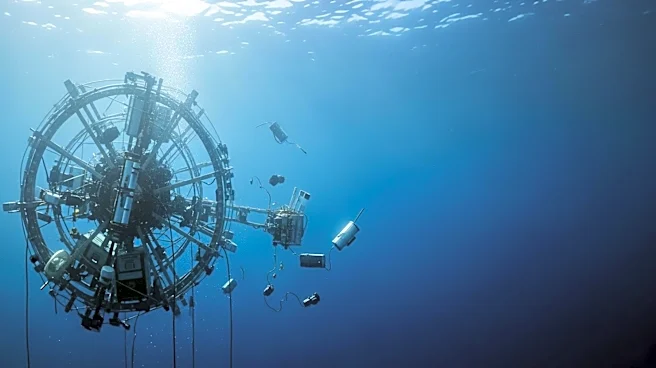
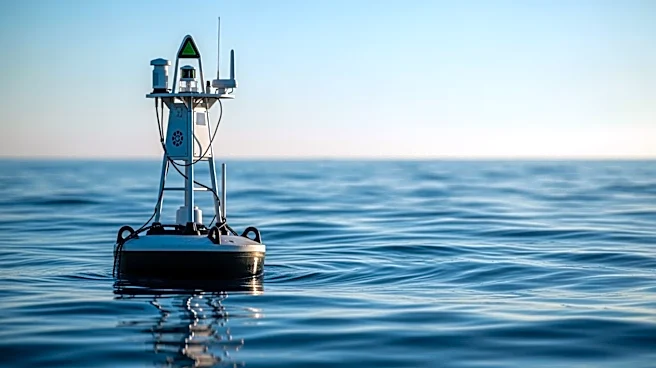
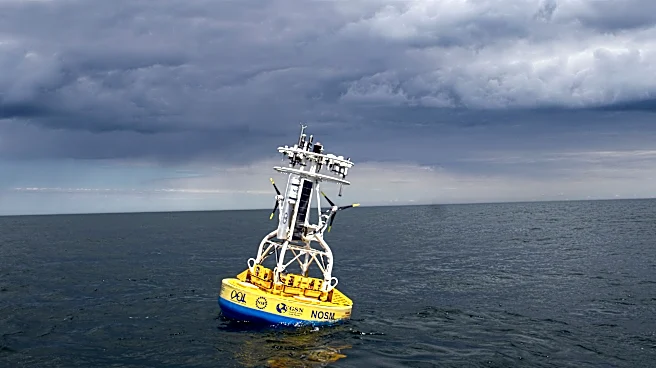
Observatories Initiative (OOI) managed by the National Science Foundation, includes a network of seafloor systems, underwater gliders, and moored surface platforms. It provides essential data for weather predictions, El Niño forecasts, and marine research. Scientists warn that removing this system will severely degrade the accuracy of weather predictions and El Niño forecasts, potentially leading to increased economic consequences for the U.S. and globally. The system's dismantling is part of a broader shift in priorities, despite its relatively low cost compared to the economic impact of climate-related disasters.
Why It's Important?
The dismantling of the ocean monitoring system could have significant implications for various sectors in the U.S. The system provides critical data that supports early warning systems for storms, cyclones, and El Niño events, which are vital for agriculture, insurance, and disaster response. Without accurate forecasts, farmers may struggle to make informed decisions about planting and harvesting, potentially leading to economic losses. Additionally, the degradation of weather prediction accuracy could increase the vulnerability of communities to severe weather events, resulting in higher costs for disaster recovery and insurance. The decision to cut this program has been criticized as short-sighted, given the substantial climate-related costs the U.S. faces annually.
What's Next?
The National Science Foundation has stated that the program is not being entirely canceled but will undergo a 'descope,' meaning a reduction in its elements. However, the specifics of what data collection capacity will remain are unclear. Meanwhile, the European Union has announced plans to enhance its ocean monitoring efforts through a new initiative, OceanEye, which will invest significantly in the Global Ocean Observing System (GOOS). This move highlights the importance of international cooperation in climate monitoring and may prompt other nations to bolster their own observation capabilities to fill the gaps left by the U.S. withdrawal.
Beyond the Headlines
The decision to dismantle the ocean monitoring system raises broader questions about the U.S.'s commitment to climate science and international collaboration. The loss of U.S. data could weaken global efforts to monitor and respond to climate change, as the U.S. system fills critical gaps in the global network. This move may also signal a shift in U.S. policy away from science-based decision-making, potentially affecting its leadership role in global climate initiatives. The long-term impact on scientific research and international relations could be profound, as other countries may need to adjust their strategies to compensate for the loss of U.S. contributions.