


What's Happening?
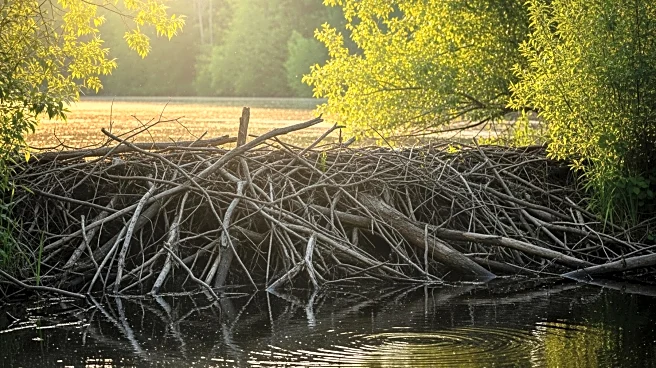
A recent study published in the journal Communications Earth & Environment has revealed that beavers play a significant role in combating climate change by creating carbon sinks. The research, conducted in northern Switzerland, shows that beavers' dam-building
activities transform streams into wetlands, which effectively trap and store carbon dioxide. This process helps reduce the amount of carbon dioxide, a major greenhouse gas, in the atmosphere. The study, led by Joshua Larsen from the University of Birmingham, highlights that beavers are unique among wildlife for their ability to actively reshape landscapes, thereby enhancing carbon storage. The findings suggest that beaver wetlands could offset 1.2–1.8% of Switzerland's annual carbon emissions, offering a natural and cost-free method of climate mitigation.
Why It's Important?
The study underscores the potential of nature-based solutions in addressing climate change. By demonstrating that beavers can significantly contribute to carbon sequestration, the research provides a compelling case for wildlife conservation as a strategy for environmental resilience. This approach could complement human-engineered solutions like wetland restoration and floodplain creation. The resurgence of beavers in Europe, due to conservation efforts, presents an opportunity to harness their ecological benefits on a larger scale. This could influence policy decisions and encourage further investment in wildlife management and habitat restoration, potentially leading to broader environmental and economic benefits.
What's Next?
The study's findings may prompt further research into the role of other 'ecosystem engineers' in climate mitigation. As beavers continue to recolonize areas across Europe, there is potential for expanding their habitats to maximize carbon storage benefits. Policymakers and environmental organizations might explore integrating beaver conservation into broader climate strategies. Additionally, the study could inspire similar research in other regions, including the U.S., to assess the feasibility of leveraging beaver populations for climate action. This could lead to new conservation initiatives and collaborations aimed at enhancing natural carbon sinks.
Beyond the Headlines
The research highlights the broader implications of ecosystem engineering by wildlife. Beavers, by altering hydrology and ecology, not only contribute to carbon storage but also enhance biodiversity and water quality. This multifaceted impact underscores the importance of preserving natural habitats and the species that maintain them. The study also raises ethical considerations regarding human intervention in natural processes. By recognizing the value of wildlife in climate solutions, there may be a shift towards more sustainable and harmonious environmental management practices.