




What's Happening?
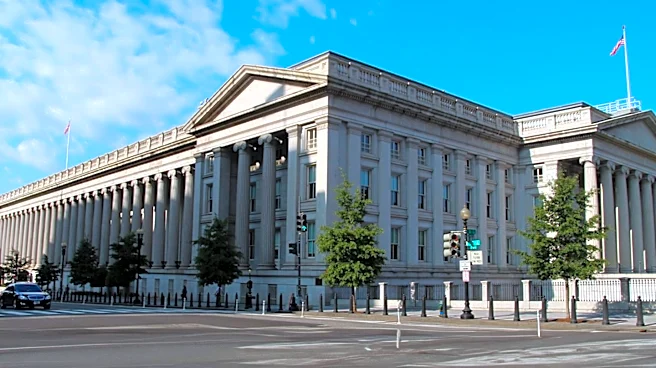
The U.S. Department of the Treasury's Office of Foreign Assets Control (OFAC) has issued two new Venezuela-related General Licenses: General License 61 and General License 62. General License 61 authorizes the supply of certain items and services to Venezuela's
telecommunications sector. General License 62 permits the negotiation and entry into contingent contracts for investment within the same sector. Additionally, OFAC has released a new Frequently Asked Question (FAQ 1266) to provide further clarification on these measures. These actions by the Treasury Department aim to facilitate specific economic activities related to telecommunications in Venezuela, indicating a targeted approach to sanctions and engagement.
Why It's Important?
These new general licenses are significant because they represent a specific carve-out in the broader U.S. sanctions regime against Venezuela. By authorizing activities within the telecommunications sector, the U.S. government is potentially seeking to support communication infrastructure and access for the Venezuelan populace, which can have both humanitarian and strategic implications. This move could allow U.S. companies or entities to engage in business related to telecommunications in Venezuela without violating sanctions, potentially opening avenues for technology transfer and service provision. It also signals a nuanced approach to foreign policy, where certain sectors are deemed essential enough to warrant exemptions from general sanctions, possibly to mitigate the impact on ordinary citizens or to maintain channels of communication.
What's Next?
The issuance of these general licenses will likely lead to increased scrutiny from various stakeholders, including human rights organizations, U.S. businesses, and the Venezuelan government. Companies interested in operating within Venezuela's telecommunications sector will need to carefully review the specifics of General Licenses 61 and 62, as well as FAQ 1266, to ensure compliance. The U.S. government will likely monitor the implementation and impact of these licenses to assess whether they achieve their intended objectives without undermining the broader sanctions framework. Future policy decisions regarding Venezuela could be influenced by the outcomes and effectiveness of these newly authorized activities.
Beyond the Headlines
Beyond the immediate economic and political implications, these licenses touch upon the complex ethical considerations of sanctions policy. While sanctions are often used as a tool to exert pressure on foreign governments, they can also inadvertently affect civilian populations. By specifically exempting the telecommunications sector, the U.S. Treasury might be attempting to balance its foreign policy objectives with humanitarian concerns, recognizing the critical role of communication in modern society. This approach could set a precedent for future targeted sanctions, where essential services are protected to minimize collateral damage, potentially leading to a more refined and ethically conscious application of economic pressure in international relations.