



What's Happening?
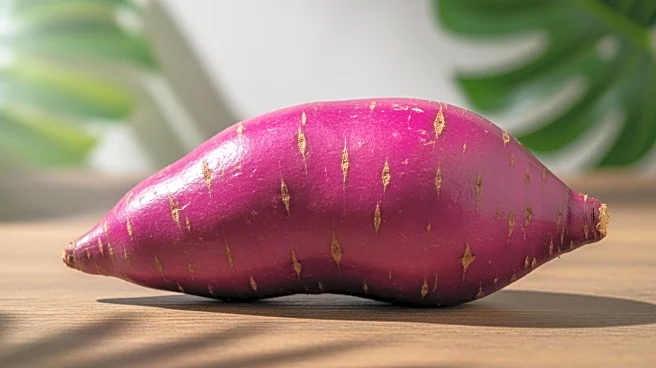
Ube, a purple yam native to the Philippines, is experiencing a surge in popularity across the United States, with its use expanding into various food and beauty products. This trend has led to a significant increase in ube exports from the Philippines, with nearly
half of the exports going to the U.S. alone. The demand for ube has been fueled by its aesthetic appeal and unique flavor, leading to its incorporation into products like Starbucks' iced ube coconut macchiato and Trader Joe's ube mochi pancake mix. However, this growing demand is putting pressure on Filipino farmers, who are struggling to keep up with the global appetite for ube. The production of ube in the Philippines has decreased slightly, and the crop's vulnerability to extreme weather conditions exacerbates the supply challenges.
Why It's Important?
The rising demand for ube in the U.S. highlights the increasing globalization of food trends and the potential economic benefits for exporting countries like the Philippines. However, it also raises concerns about cultural appropriation and the detachment of ube from its cultural roots. As ube becomes more popular internationally, there is a risk that its cultural significance in the Philippines may be overshadowed. Additionally, the pressure on Filipino farmers to meet global demand could lead to unsustainable farming practices and further strain on the country's agricultural resources. This situation underscores the need for a balance between global market opportunities and the preservation of cultural heritage.
What's Next?
As the demand for ube continues to grow, it is likely that more international companies will seek to incorporate it into their product lines. This could lead to increased investment in ube production in the Philippines and potentially other countries. However, there may also be a push from cultural and agricultural advocates to ensure that the cultural significance of ube is preserved and that sustainable farming practices are maintained. The Filipino government and industry stakeholders may need to develop strategies to support farmers and protect the cultural identity of ube while capitalizing on its global popularity.
Beyond the Headlines
The ube trend highlights broader issues of cultural identity and globalization. As foods and products from different cultures gain international popularity, there is a risk of cultural elements being commodified and losing their original significance. This situation with ube serves as a reminder of the importance of cultural preservation in the face of globalization. It also raises questions about the ethical responsibilities of companies and consumers in respecting and acknowledging the cultural origins of the products they enjoy.