



What's Happening?
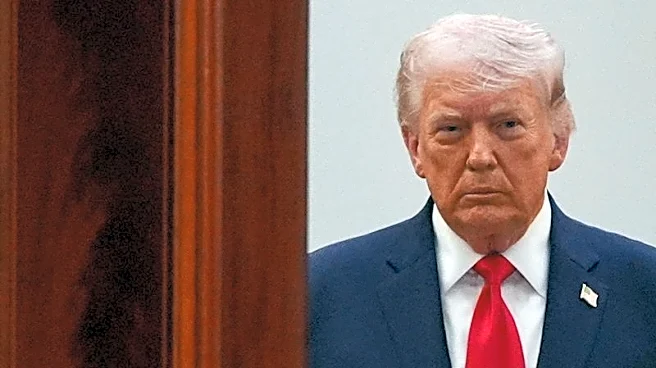
Recent polling indicates that a significant number of Americans feel their taxes are too high, despite President Trump's tax law changes aimed at providing relief. A Fox News poll conducted in late March reveals that about 7 in 10 registered voters believe
their taxes are 'too high,' an increase from the previous year. This sentiment is prevalent among various voter groups, including moderates, rural voters, and white voters without a college degree. The dissatisfaction extends beyond personal tax obligations, with many Americans believing that wealthy individuals and corporations are not contributing their fair share. This perception is supported by a Pew Research Center poll, which found that about 6 in 10 Americans are troubled by the notion that the rich and corporations are underpaying taxes.
Why It's Important?
The widespread discontent with tax levels and perceptions of unfairness in the tax system could have significant political and economic implications. For President Trump and the Republican Party, this dissatisfaction poses a challenge, especially as they approach the midterm elections. The belief that the wealthy are not paying enough taxes and that government spending is wasteful could influence voter behavior and policy discussions. Additionally, the perception that tax relief measures have not effectively alleviated financial burdens may impact public trust in the administration's economic policies. This issue is further compounded by concerns over inflation and sluggish economic growth, which are affecting Americans' personal finances.
What's Next?
As the midterm elections approach, the Republican Party may need to address these concerns to maintain voter support. This could involve revisiting tax policies to ensure they are perceived as fair and beneficial to a broader segment of the population. Additionally, addressing the perception of government waste and inefficiency could be crucial in regaining public trust. Political leaders may also need to focus on broader economic issues, such as inflation and cost of living, to demonstrate their commitment to improving Americans' financial well-being. The ongoing debate over tax fairness and government spending is likely to remain a central issue in political discourse.