


What's Happening?
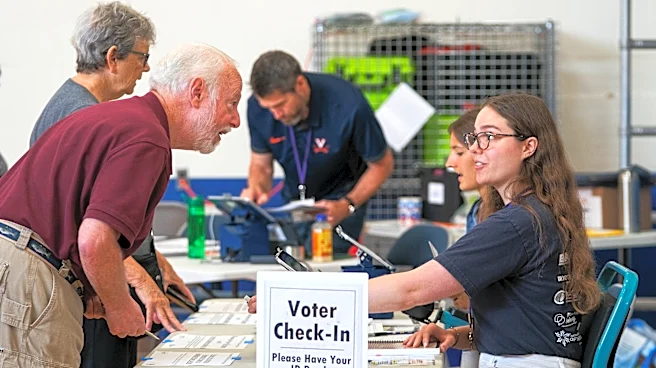
The recent Virginia primary has set the stage for the upcoming midterm elections, which hold significant implications for the control of Congress. The primary saw light voter turnout but has positioned candidates for all of the state's congressional seats
and a U.S. Senate race. Currently, House Republicans hold a narrow 218-212 edge, with one independent and four seats unfilled. Virginia Democrats had initially hoped to gain a significant advantage from a redistricting referendum, potentially securing four additional seats. However, the state Supreme Court rejected the referendum, leaving Democrats with a realistic chance of flipping two seats. The 2nd District House race, featuring a rematch between former Congresswoman Elaine Luria and GOP Rep. Jen Kiggans, is seen as a bellwether for the broader election. Additionally, U.S. Sen. Mark Warner will face retired Army Maj. Gen. Bert Mizusawa in what Warner has stated will be his last Senate campaign.
Why It's Important?
The outcomes of these elections could significantly impact the balance of power in Congress. With the House currently under a slim Republican majority, each race becomes crucial in determining which party will control the legislative agenda. The Virginia races, particularly in the 2nd and 1st Districts, are pivotal as they could signal broader national trends. The Senate race involving Mark Warner is also critical, as Democrats aim to regain control of the Senate. The results in Virginia could influence national strategies and resource allocation by both parties as they seek to secure or expand their influence in Congress.
What's Next?
As the midterm elections approach, both parties will likely intensify their campaigns in Virginia, focusing on key districts that could swing the balance of power. Democrats will aim to capitalize on any vulnerabilities within the Republican ranks, while Republicans will seek to defend their positions and possibly gain additional seats. The outcome of these races will be closely watched as indicators of national political sentiment and could shape legislative priorities in the next Congress.