



What's Happening?
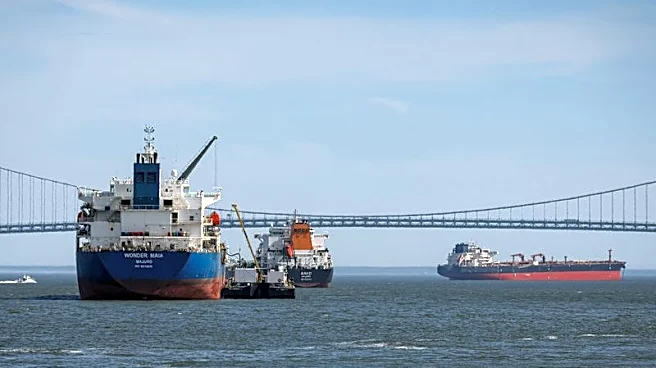
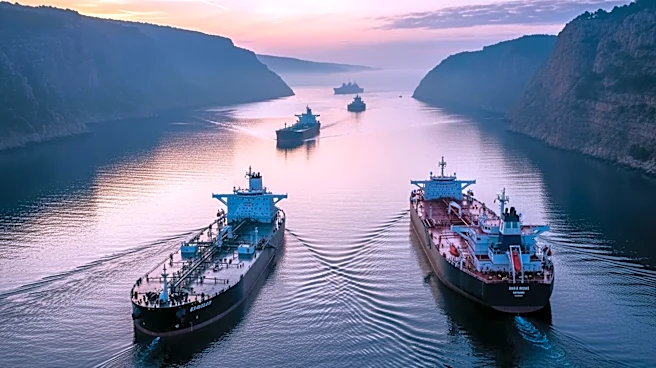
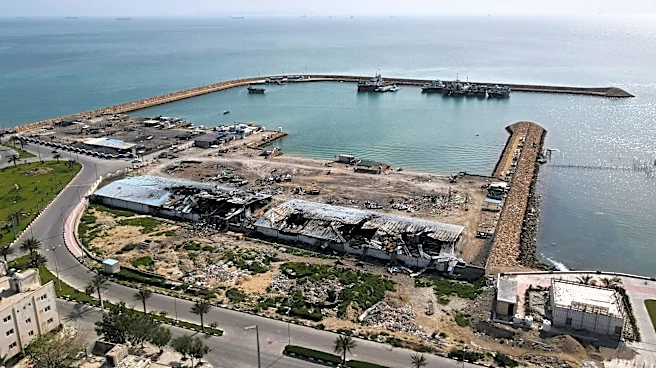
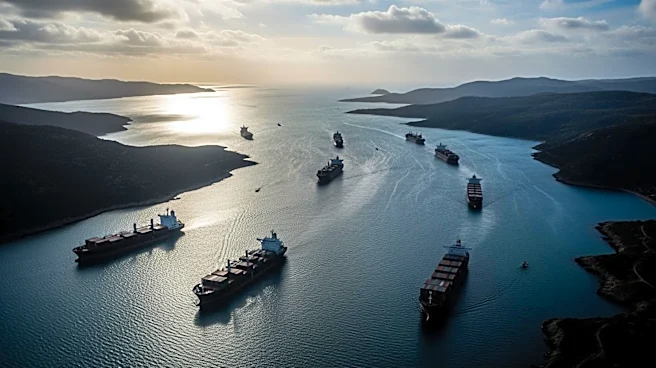
The ongoing war in the Middle East has significantly impacted global supply chains, pushing pressures to a three-year high. The conflict has led to maritime disruptions, particularly at the Strait of Hormuz, affecting oil-derived products like polymers,
PVC, and rubber. Surging oil prices have increased transportation costs, with Asia being particularly hard-hit due to its reliance on Middle Eastern oil. Labor shortages have also risen, contributing to the supply chain stress. Despite these challenges, the situation has not yet escalated into a broad-based economic shock.
Why It's Important?
The disruption in supply chains due to the Middle East conflict has far-reaching implications for global trade and economic stability. The increased transportation costs and shortages of essential materials can lead to higher production costs and inflationary pressures. Companies are forced to secure supplies and increase inventory buffers, which can lock in higher costs and affect profitability. The situation underscores the vulnerability of global supply chains to geopolitical events and the need for businesses to develop more resilient strategies to mitigate such risks.
What's Next?
As the conflict continues, businesses may need to adapt by diversifying their supply sources and investing in alternative materials to reduce dependency on affected regions. Governments and industry leaders might explore diplomatic solutions to ease tensions and restore stability in the region. The focus on securing supply chains could lead to increased collaboration between countries to ensure the availability of critical resources. Monitoring the situation closely will be essential for stakeholders to anticipate further disruptions and adjust their strategies accordingly.