
What's Happening?
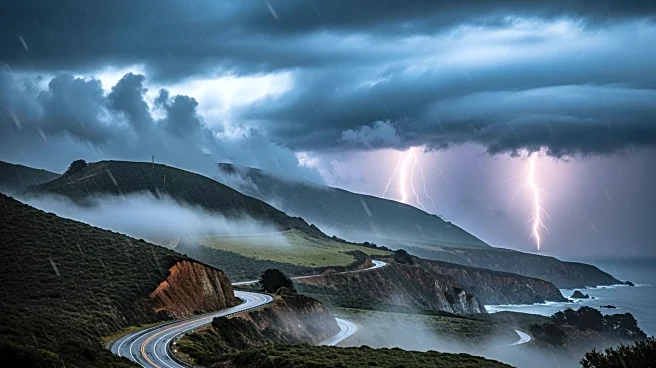
Southern California has been hit by a record-breaking storm, resulting in the wettest Christmas holiday in modern history. The storm, part of a series of downpours this rainy season, has led to significant
rainfall across the region, breaking decades-old records. Governor Gavin Newsom has declared a state of emergency in several counties, including Los Angeles, Orange, San Diego, Riverside, San Bernardino, and Shasta, as communities struggle to manage the storm's effects. The storm has caused fatalities, including a man in San Diego who was killed by a falling tree. The storm has also led to mudslides and flooding, prompting evacuations in mountain communities such as Wrightwood and Lytle Creek.
Why It's Important?
The declaration of a state of emergency highlights the severity of the storm's impact on Southern California. The heavy rainfall and subsequent flooding pose significant challenges to infrastructure and public safety. The storm's effects are exacerbated in areas with recent burn scars, increasing the risk of mudslides. The emergency response will require coordination among local and state agencies to ensure the safety of residents and manage the damage. The storm's impact on transportation and local economies could be substantial, with potential disruptions to travel and business operations during the holiday season.
What's Next?
As the storm subsides, Southern California is expected to experience a dry weekend, allowing for recovery efforts to begin. Local and state agencies will focus on assessing the damage and providing assistance to affected communities. The declaration of a state of emergency will facilitate access to resources and support for recovery operations. Residents and businesses will need to navigate the aftermath of the storm, addressing issues such as property damage and disrupted services. The long-term implications of the storm may include discussions on improving infrastructure resilience to extreme weather events.