





What's Happening?
Colorado agriculture officials are implementing an updated emergency rule to safeguard livestock and other animals from the New World Screwworm. This action comes in response to recent detections of the parasite in Texas and New Mexico, an increase in cases
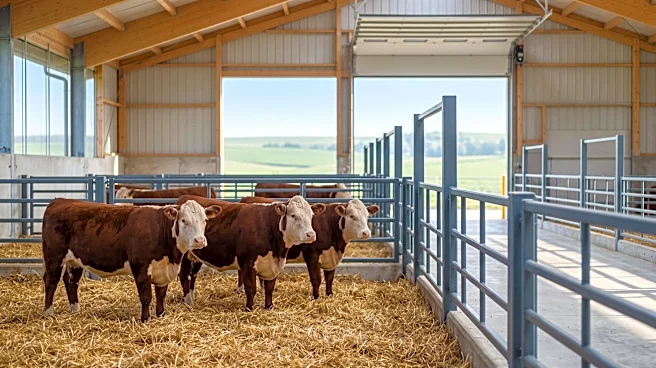
in northern Mexico, and the resumption of international livestock movement. The Colorado Agricultural Commission reviewed the updated rule, which was subsequently adopted by Colorado Commissioner of Agriculture Kate Greenberg, replacing a previous emergency rule set to expire. The New World Screwworm poses a severe threat as its larvae infest wounds and feed on the living tissue of warm-blooded animals. The new regulations establish clear import requirements for animals originating from known screwworm-infested zones, including pre-movement inspections, Certificates of Veterinary Inspection issued within five days of movement, entry permits, authorized treatment of open wounds, and post-arrival inspections. The rule also grants Colorado officials the authority to quarantine non-compliant animals or order their return to their premises of origin, with potential civil or criminal enforcement for violations. These measures aim to prevent the introduction of the parasite into Colorado as animals traverse state and international borders.
Why It's Important?
The tightening of livestock protection measures in Colorado is crucial for several reasons, primarily concerning the state's agricultural economy and animal health. An outbreak of New World Screwworm could devastate Colorado's livestock industry, leading to significant economic losses for ranchers and farmers. The parasite's ability to infest and feed on living tissue can cause severe suffering and death in affected animals, impacting animal welfare and productivity. Furthermore, the interconnectedness of the U.S. livestock market means that an outbreak in one state could trigger broader restrictions on animal movement and trade, affecting the national supply chain. The proactive stance by Colorado officials, in collaboration with federal agencies like the U.S. Department of Agriculture (USDA), Centers for Disease Control and Prevention, and U.S. Customs and Border Protection, highlights the importance of robust biosecurity protocols in preventing the spread of animal diseases. This situation underscores the constant vigilance required to protect agricultural assets from biological threats, especially with increasing international trade and animal movement.
What's Next?
Following the adoption of the updated emergency rule, Colorado will focus on rigorous enforcement of the new import requirements for livestock and other animals. This includes conducting thorough pre-movement and post-arrival inspections, ensuring proper veterinary certification, and implementing authorized treatments for open wounds. The Colorado Department of Agriculture will continue to monitor the situation in neighboring regions, including Texas, New Mexico, and northern Mexico, for any changes in New World Screwworm activity. Collaboration with federal agencies will remain essential to align state-level protections with broader federal import requirements and surveillance efforts. Producers and animal handlers in Colorado will need to familiarize themselves with the updated regulations to ensure compliance and prevent potential violations. The effectiveness of these measures will be continuously assessed, and adjustments may be made based on the evolving threat landscape of the New World Screwworm. The USDA is also expanding sterile fly production and planning a new facility in Texas, which will contribute to regional control efforts.
Beyond the Headlines
The New World Screwworm threat extends beyond immediate livestock health, touching upon broader implications for ecological balance and public health. While primarily affecting animals, the presence of such parasites can disrupt wildlife populations, potentially altering ecosystems. The need for stringent biosecurity measures also highlights the economic vulnerabilities of agricultural sectors to biological threats, emphasizing the importance of diversified economic strategies and robust emergency response plans. The reliance on international cooperation and federal-state partnerships in managing such threats underscores the complex governance challenges in protecting national borders from biological incursions. Furthermore, the use of methods like sterile fly release, a technology developed by the USDA, showcases the critical role of scientific research and innovation in agricultural defense. This ongoing battle against the screwworm serves as a reminder of the constant interplay between human activity, animal health, and environmental integrity, necessitating continuous adaptation and investment in preventative strategies.