






What's Happening?
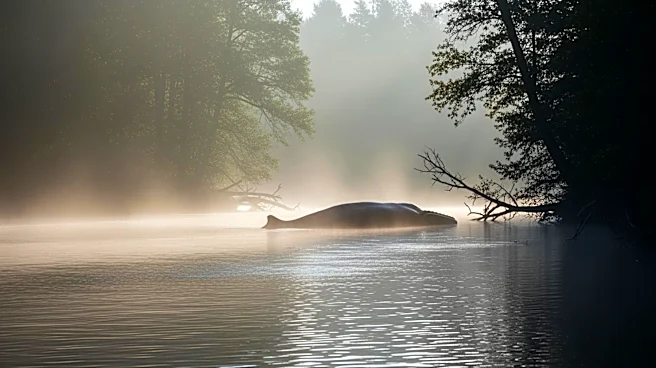
A juvenile gray whale was discovered dead in the Willapa River near Raymond, Washington, after swimming 20 miles inland. The whale's journey amazed local residents as it traveled from Willapa Bay along Highway 101. The Cascadia Research Collective, a marine
wildlife nonprofit, confirmed the whale's death. The whale appeared thin but was behaving normally, with no visible injuries. The incident highlights a broader issue affecting gray whales in the eastern Pacific, where reduced food availability in the northern Bering and Chukchi seas has been a concern since 2019. The National Oceanic and Atmospheric Administration (NOAA) Fisheries declared an unusual mortality event for eastern gray whales from late 2018 to late 2023, involving 690 strandings from Alaska to Mexico. Researchers suspect that hunger drove the whale to seek new feeding grounds.
Why It's Important?
The death of the gray whale underscores a significant ecological crisis facing the species in the eastern Pacific. The population of gray whales has been declining due to changes in their Arctic feeding areas, leading to malnutrition and increased mortality. This situation has broader implications for marine ecosystems and biodiversity, as gray whales play a crucial role in their environment. The decline in whale populations could affect the balance of marine life and the health of ocean ecosystems. Additionally, the event highlights the impact of climate change and environmental shifts on wildlife, raising concerns about the long-term sustainability of marine species and the need for conservation efforts.
What's Next?
Researchers from the Cascadia Research Collective plan to examine the whale to determine the exact cause of death. This examination could provide further insights into the challenges faced by gray whales and inform conservation strategies. The NOAA Fisheries and other environmental agencies may continue to monitor gray whale populations and their migration patterns to assess the ongoing impact of environmental changes. Conservationists and policymakers might advocate for measures to protect marine habitats and address the root causes of food scarcity in the whales' feeding areas.
Beyond the Headlines
The plight of the gray whale reflects broader environmental and ethical considerations. The decline in whale populations raises questions about human responsibility in mitigating climate change and protecting vulnerable species. It also highlights the interconnectedness of global ecosystems and the potential consequences of environmental degradation. The situation may prompt discussions on sustainable practices and the importance of preserving biodiversity for future generations.