




What's Happening?
Polish security services have reportedly thwarted a Russian intelligence operation near the border with the Kaliningrad exclave in late October and early November. According to Polish newspaper Rzeczpospolita, citing senior security sources, the alleged
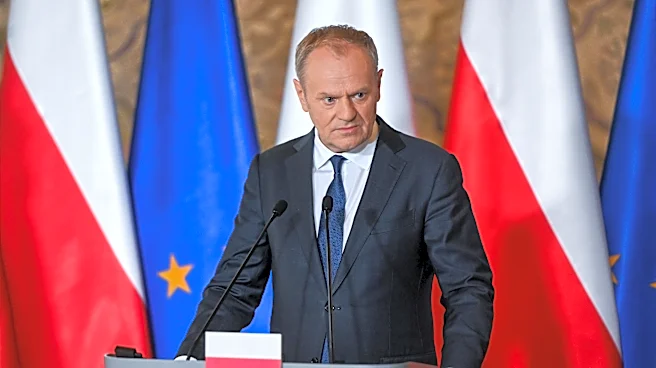
plan involved sabotage on Polish territory, potentially combined with a staged attack inside Russia, designed to be attributed to Ukraine. The objective was to create significant casualties and plant evidence to implicate Kyiv. One source compared the alleged plot to the 1939 Gleiwitz incident, a Nazi false-flag operation used to justify the invasion of Poland. Polish authorities responded by deploying counterterrorism police, intelligence officers, border guards, and elite military units such as GROM, NIL, and AGAT. Similar warnings were reportedly shared with Lithuania, Latvia, and Estonia. Tomasz Siemoniak, Poland’s intelligence services coordinator, confirmed that authorities assessed a real threat and took preventive measures, though he did not endorse all specific details of the alleged plot. Prime Minister Donald Tusk also stated that rapid mobilization after suspicious activity near the border likely prevented a provocation.
Why It's Important?
This incident highlights the ongoing hybrid warfare tactics employed in the region and underscores the heightened tensions along NATO's eastern flank. A successful false-flag operation of this nature could have significantly escalated the conflict, potentially drawing NATO allies into a more direct confrontation with Russia under false pretenses. The alleged goal of undermining Polish public support for Ukraine and disrupting aid to Kyiv demonstrates Russia's strategic intent to weaken Western unity and support for Ukraine. The successful prevention of this operation showcases the effectiveness of intelligence sharing and coordinated responses among allied nations, reinforcing deterrence in a strategically sensitive area. It also signals that attempts to test or undermine alliance territory will be met with prompt and decisive action, aiming to prevent conflict rather than initiate it.
What's Next?
The immediate next steps involve continued vigilance and enhanced security measures along Poland's border with Kaliningrad and other vulnerable areas. Polish authorities and allied intelligence services will likely maintain increased surveillance and intelligence gathering to detect and preempt any further potential provocations. The incident may lead to further diplomatic condemnations of Russia's alleged actions and could prompt discussions within NATO about strengthening collective defense and intelligence cooperation against hybrid threats. While the specific details of the plot remain unverified by independent sources, the confirmed deployment of significant security forces indicates a serious assessment of threat by Polish authorities. This event could also influence public opinion and political discourse within Poland and other European nations regarding the ongoing conflict and the need for robust security postures.
Beyond the Headlines
The alleged Russian false-flag plot carries deeper implications beyond immediate security concerns. It underscores the persistent threat of disinformation and deception as tools of modern warfare, reminiscent of historical precedents like the Gleiwitz incident. Such tactics aim to manipulate public perception, sow discord among allies, and create pretexts for aggression. The incident also highlights the critical role of intelligence agencies in preventing wider conflicts through early detection and preemptive action. Ethically, the alleged plan to cause mass casualties and falsely blame another nation represents a severe breach of international norms and humanitarian principles. Legally, if proven, such actions could constitute acts of state-sponsored terrorism or aggression. Culturally, these events contribute to a climate of distrust and suspicion, making diplomatic resolutions more challenging and reinforcing the narrative of an ongoing struggle against malign influence operations.