

What's Happening?
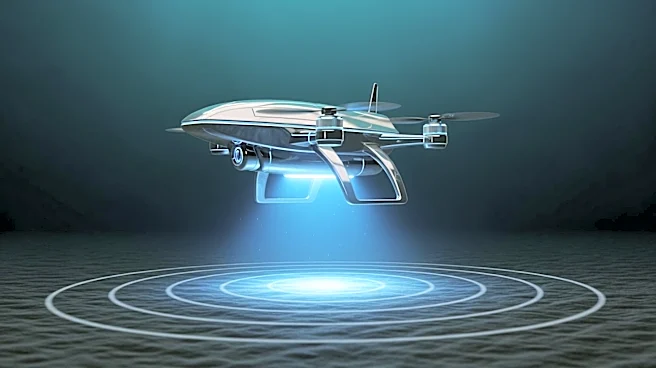
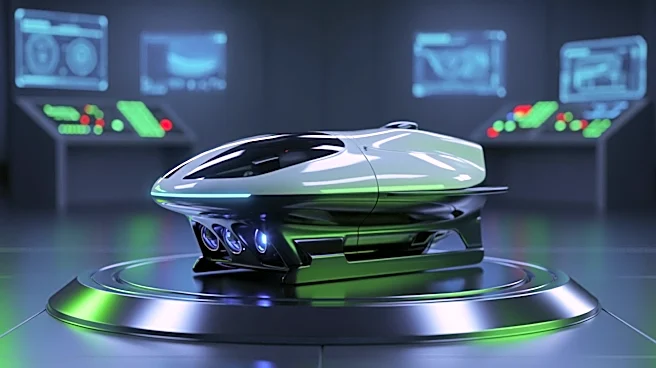
Cellula Robotics US Inc. and Metron, Inc. have entered into a decade-long agreement to provide integrated Autonomous Underwater Vehicle (AUV) solutions tailored for the United States defense market. This collaboration combines Cellula's commercial off-the-shelf
(COTS) long-endurance AUV platforms with Metron's expertise in adaptive mission autonomy and undersea warfare. The partnership aims to address the increasing demand for rapid fielding, modularity, and operational reliability in underwater environments. By utilizing an open-architecture approach, the systems can be quickly scaled and integrated with third-party sensors and mission-specific payloads. This agreement builds on a history of cooperation between the two companies, including contributions to the Defense Innovation Unit's CAMP project, and aims to provide the US Navy with a mission-ready ecosystem that combines proven vehicle hardware with high-level decision superiority software.
Why It's Important?
The partnership between Cellula Robotics and Metron is significant as it enhances the US Navy's capabilities in undersea warfare through advanced autonomous systems. This collaboration is expected to improve the Navy's operational efficiency and adaptability in underwater missions, which are critical for national security. The integration of advanced AUV systems will likely provide the Navy with superior decision-making capabilities and operational flexibility. This development also underscores the importance of public-private partnerships in advancing military technology and maintaining a competitive edge in defense capabilities. The agreement further strengthens the US defense industrial base by leveraging domestic expertise and fostering innovation in maritime technology.
What's Next?
The partnership is set to expand Cellula's presence in the United States, leveraging its growing domestic team alongside Metron's extensive experience in the US defense sector. The companies plan to align technological development closely with evolving mission priorities, ensuring that the systems meet the specific needs of the US Navy. As the partnership progresses, it is expected to result in the deployment of next-generation autonomous undersea systems that enhance the Navy's strategic capabilities. The collaboration may also lead to further innovations in AUV technology, potentially influencing future defense strategies and procurement decisions.