


What's Happening?
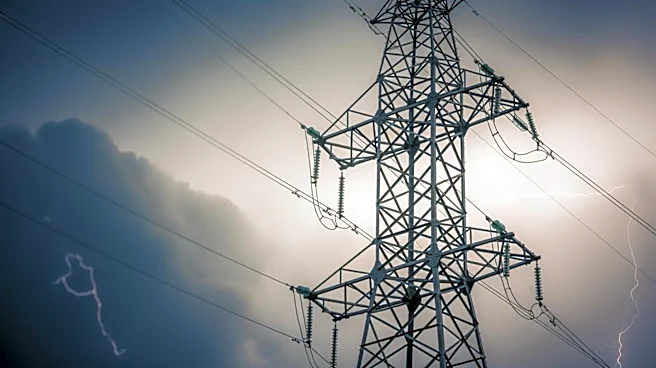
Meteorologists are predicting a slightly below-average hurricane season with about 13 named Atlantic storms. Despite this, experts warn that the U.S. power grid remains vulnerable to significant damage. A recent analysis by Hayley Lai, a grids and utilities
analyst for BloombergNEF, highlights that the number of storms is not always indicative of the potential damage to power infrastructure. Historical data shows that the resilience and concentration of local infrastructure play a crucial role in the extent of damage. For instance, Hurricane Helene in September 2024 caused extensive damage, affecting over 7 million customers across 10 states, with North Carolina being the hardest hit. The storm impacted more than 350 substations, demonstrating the severe impact on transmission lines.
Why It's Important?
The potential for severe damage to the power grid, even in a quieter hurricane season, underscores the need for continued investment in infrastructure resilience. Utilities like Duke Energy and Florida Power & Light Co. have been increasing their investments in storm resilience, including efforts to bury power lines. This is crucial as the cost of replacing damaged infrastructure can be exorbitant, reaching up to $5 million per mile. The broader impact on society includes prolonged power outages, which can disrupt daily life and economic activities. The risk of extended outages remains a significant concern, highlighting the importance of preparedness and infrastructure upgrades.
What's Next?
Utilities are likely to continue their efforts to enhance grid resilience, focusing on burying power lines and upgrading infrastructure. The ongoing investments are expected to mitigate the impact of future storms, although the risk of severe damage persists. Stakeholders, including government agencies and utility companies, may need to collaborate on strategies to improve grid reliability and reduce recovery times after storms. Monitoring and adapting to changing weather patterns will be essential in planning for future hurricane seasons.