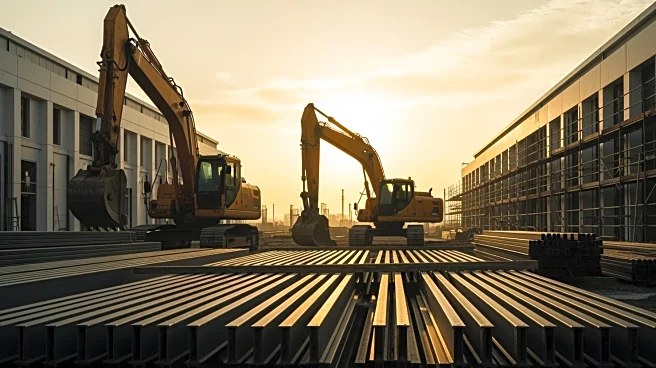

What's Happening?
Syria is undergoing a significant economic transition following the fall of its previous regime in late 2024. The Syrian government has announced a new economic orientation focused on openness, reconstruction,
and private sector-led growth. This shift includes signing multibillion-dollar investment agreements with regional partners, particularly from the Gulf, targeting sectors like infrastructure, energy, and tourism. Legal and regulatory reforms are being implemented to transition towards a market-oriented economy. Despite these efforts, Syria's economy remains fragile, with low productivity and damaged infrastructure.
Why It's Important?
The economic reforms and investments in Syria are crucial for its post-conflict recovery. The involvement of regional partners indicates growing confidence in Syria's potential for economic revival. These developments could lead to job creation, technology transfer, and integration into regional and global markets. However, the success of these initiatives depends on sustained reforms, legal certainty, and improved governance. The international community's response, including the lifting of sanctions and support for economic stability, will play a vital role in Syria's recovery.
What's Next?
Syria's government will likely continue to pursue foreign investments and implement economic reforms to stabilize and grow its economy. The international community, including organizations like the IMF and World Bank, may increase their engagement with Syria, providing technical assistance and monitoring economic progress. Regional political and economic support will be essential in maintaining stability and encouraging further investments. The success of these efforts will depend on Syria's ability to maintain political stability and implement effective governance and legal frameworks.