







What's Happening?
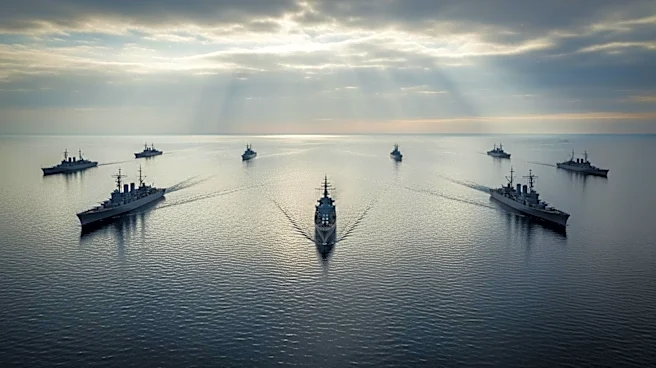
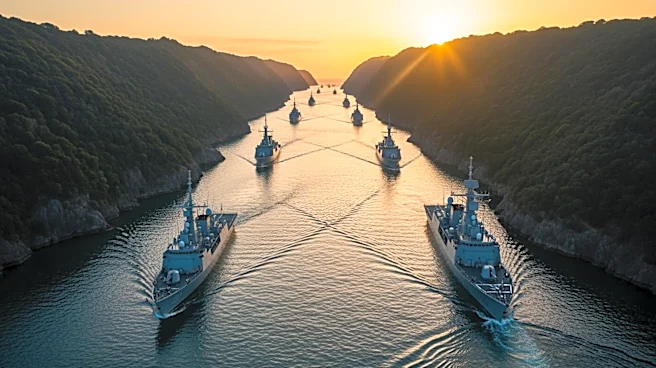
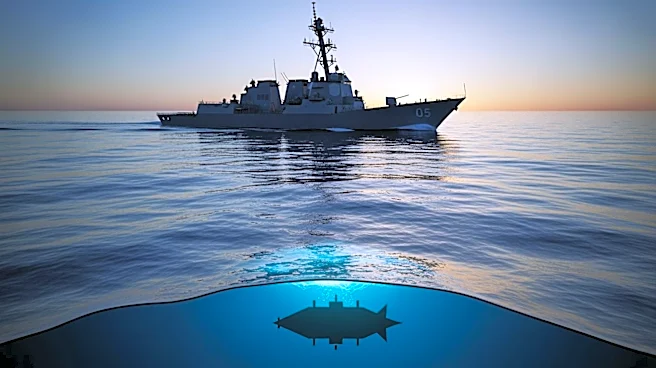
The U.S. Navy has initiated a blockade of the Strait of Hormuz, aiming to cut off Iran's oil exports and increase economic pressure on the country. This action follows weeks of U.S. military strikes that have not succeeded in bringing Iran to the negotiating
table. The blockade is intended to disrupt Iran's main source of revenue by preventing maritime trade. The U.S. Middle East command, CENTCOM, has stated that it will intercept vessels heading to and from Iranian ports while ensuring freedom of navigation for other Persian Gulf ports. This strategy is part of a broader effort to weaken Iran's economy by targeting its oil exports.
Why It's Important?
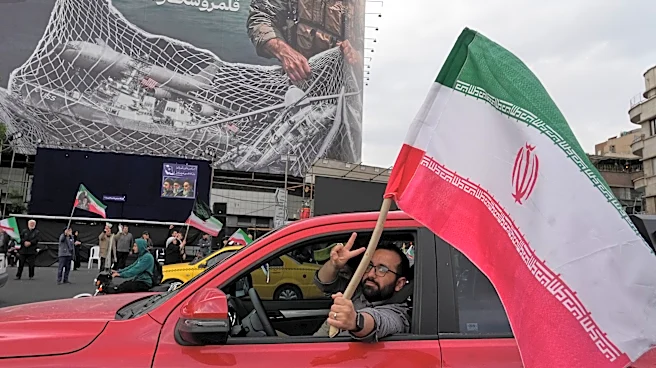
The blockade of the Strait of Hormuz is a critical development in the U.S.-Iran conflict, as it targets a key economic lifeline for Iran. The strait is a vital passage for global oil shipments, and its blockade could have significant implications for international oil markets and global economic stability. The U.S.'s actions may provoke responses from Iran and other countries with vested interests in the region, potentially escalating tensions. The effectiveness of the blockade in achieving U.S. objectives will be closely monitored, as it could influence future U.S. military and economic strategies.
Beyond the Headlines
Naval blockades are historically challenging to enforce and can lead to unintended consequences. The U.S. Navy's ability to sustain the blockade and manage the high volume of maritime traffic in the Strait of Hormuz will be tested. Additionally, the blockade could strain U.S. relations with allies and trading partners who may be affected by disruptions in oil supply. The long-term impact on Iran's economy and its potential to destabilize the region adds complexity to the situation, highlighting the risks associated with such aggressive economic tactics.